
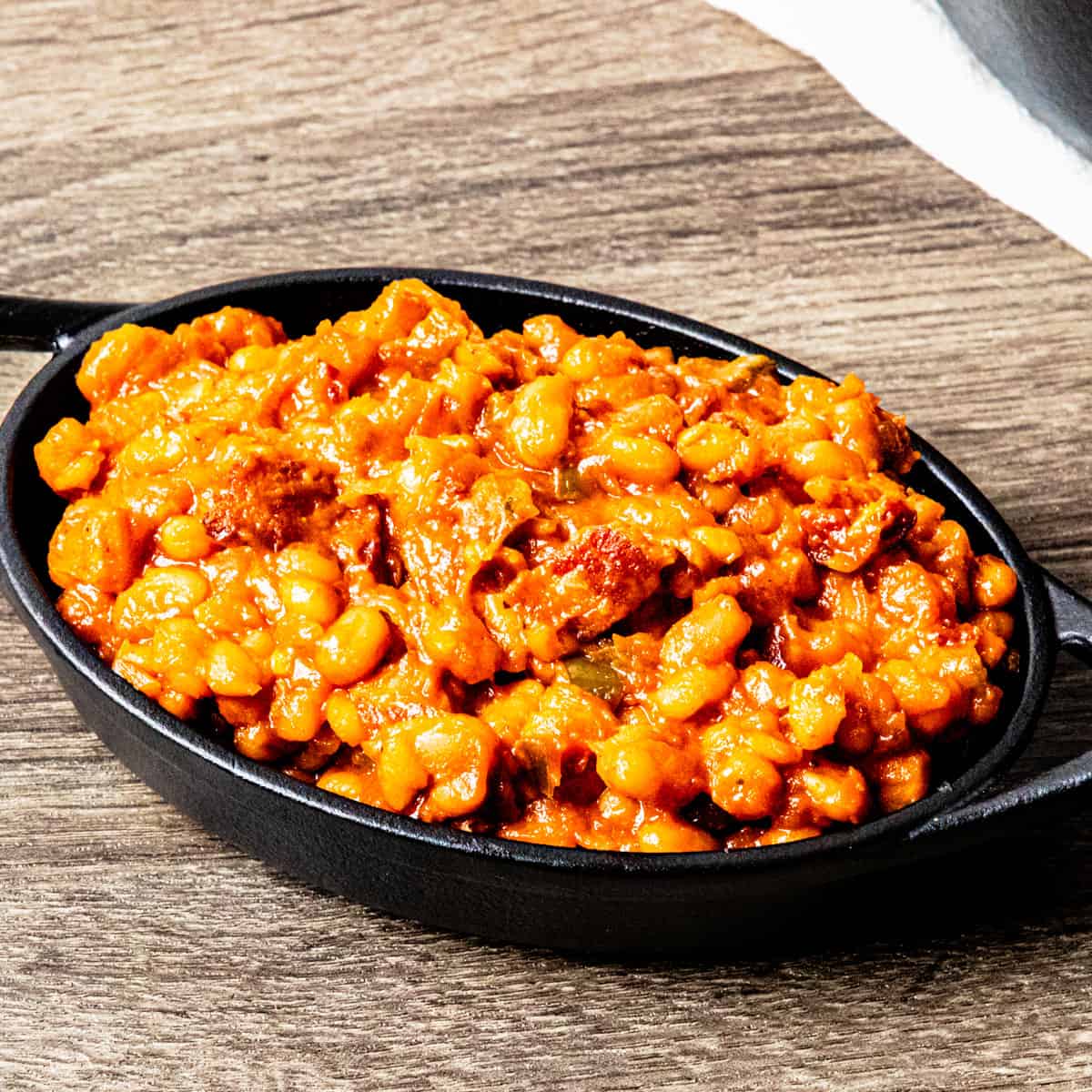
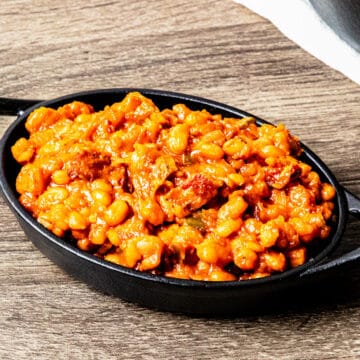
These Smoked Baked Beans are sweet, smoky, savory, and loaded with bacon, onion, green pepper, maple syrup, BBQ sauce, and a little apple cider vinegar to balance everything out. They're slow-cooked on the smoker until thick, bubbly, and packed with backyard BBQ flavor.
I like this recipe because it starts with canned beans, so you get a big-flavor cookout side dish without soaking dried beans or babysitting a pot all day. Toss the pan on the smoker alongside pulled pork, ribs, brisket, chicken, or burgers, and let the smoke do the work.
Jump to:
- Quick Look
- Why this Recipe Works
- Ingredient Notes
- How to Make Smoked Baked Beans
- What Wood to Use for Smoked Beans
- Tips for the Best Smoked Baked Beans
- Storage and Reheating
- Can You Make Smoked Baked Beans Ahead?
- What to Serve with Baked Beans
- No Smoker? Try These Cooking Options
- Frequently Asked Questions
- More Side Dish Recipes
- 📖 Recipe
- You May Also Like
Quick Look
- Flavor: Sweet, smoky, savory, tangy BBQ beans
- Key ingredients: Navy beans, bacon, onion, green pepper, BBQ sauce, maple syrup
- Smoker temperature: 225°F to 250°F
- Cook time: 2 to 3 hours
- Cooking vessel: Cast iron Dutch oven, cast iron skillet, or foil pan
- Best served with: Pulled pork, ribs, brisket, smoked chicken, burgers, hot dogs, or coleslaw
Why this Recipe Works
- Big BBQ flavor with canned beans - Starting with canned navy beans keeps the recipe easy while still giving you a homemade sauce and plenty of smoky flavor.
- Sweet, smoky, and tangy - Brown sugar, maple syrup, BBQ sauce, ketchup, Dijon mustard, and apple cider vinegar give the beans a balanced barbecue flavor.
- Bacon adds richness - Cooking the bacon first gives the beans a savory base and adds smoky flavor before they even hit the smoker.
- Perfect cookout side dish - These smoked baked beans pair with pulled pork, ribs, brisket, burgers, hot dogs, and grilled chicken.
- Easy to make ahead - The beans reheat well, so they're great for parties, holidays, and backyard BBQ menus.
If you need a quicker option for baked beans, be sure to check out my Instant Pot Baked Beans recipe.
Ingredient Notes
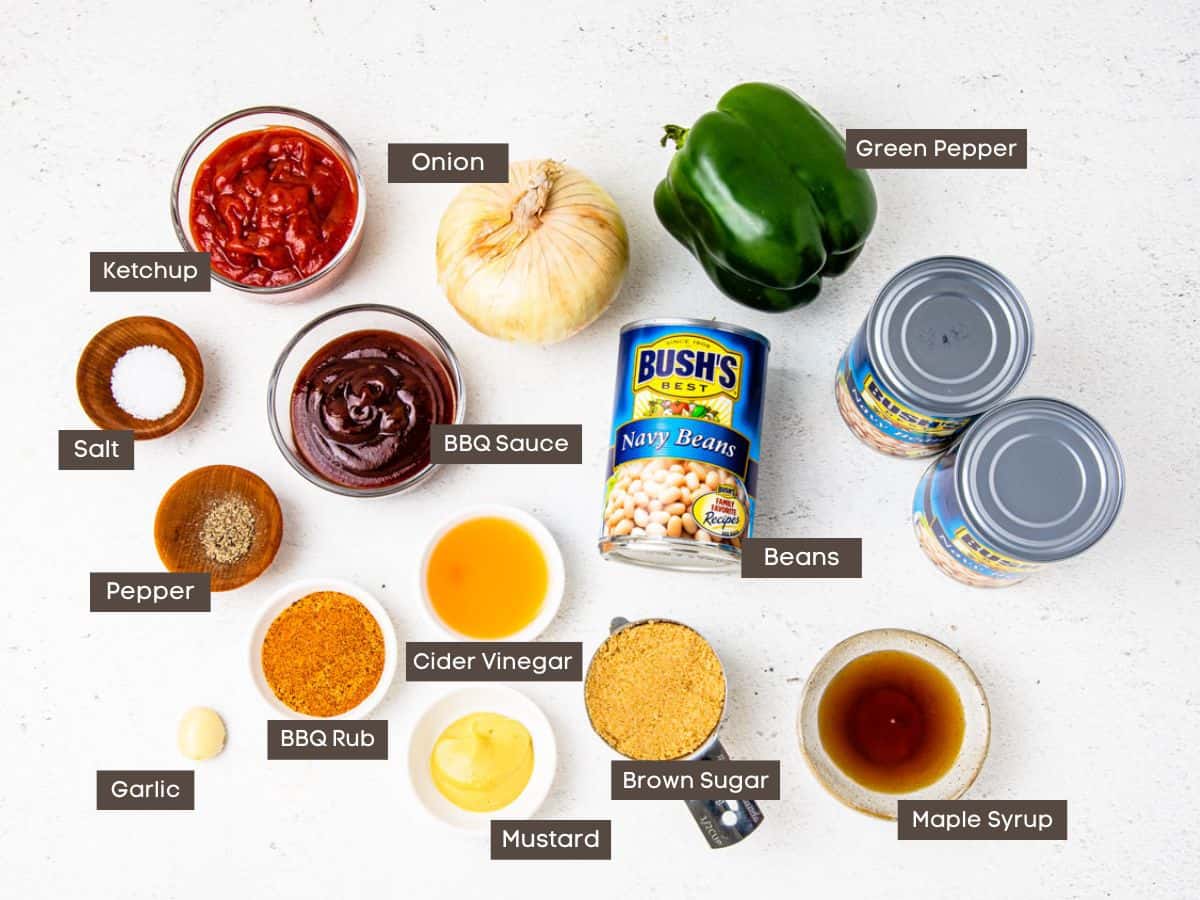
- Navy Beans: I use canned navy beans for this recipe because they're small, tender, and great at soaking up sauce. Great Northern beans, cannellini beans, or pinto beans can also work. Be sure to drain and rinse the beans since this recipe uses a homemade BBQ-style sauce instead of the liquid from canned baked beans.
- Onion and Green Pepper: Yellow onion and green bell pepper add classic baked bean flavor and a little texture. Dice them small so they soften into the sauce.
- Bacon: Bacon adds smoky, salty flavor and gives the vegetables something flavorful to cook in. Cut it into small strips so it mixes evenly through the beans.
- BBQ Sauce and Ketchup: BBQ sauce brings sweet, smoky, tangy flavor, and ketchup helps build a thick, familiar baked bean sauce. Use a BBQ sauce you already like because the flavor will come through. I typically use Sweet Baby Ray's original sauce in this recipe.
- BBQ Rub: I use my homemade all-purpose BBQ rub, but feel free to substitute your own blend or your favorite store-bought rub.
- Brown Sugar and Maple Syrup: Brown sugar gives the beans classic sweetness, while real maple syrup adds a richer flavor. I recommend real maple syrup instead of pancake syrup. For a slightly different flavor profile, you can substitute molasses.
- Dijon Mustard and Apple Cider Vinegar: Dijon mustard and apple cider vinegar cut through the sweetness and keep the beans from tasting flat. That little bit of tang makes a big difference.
See the recipe card at the bottom of this post for the complete list of ingredients and measurements.
How to Make Smoked Baked Beans
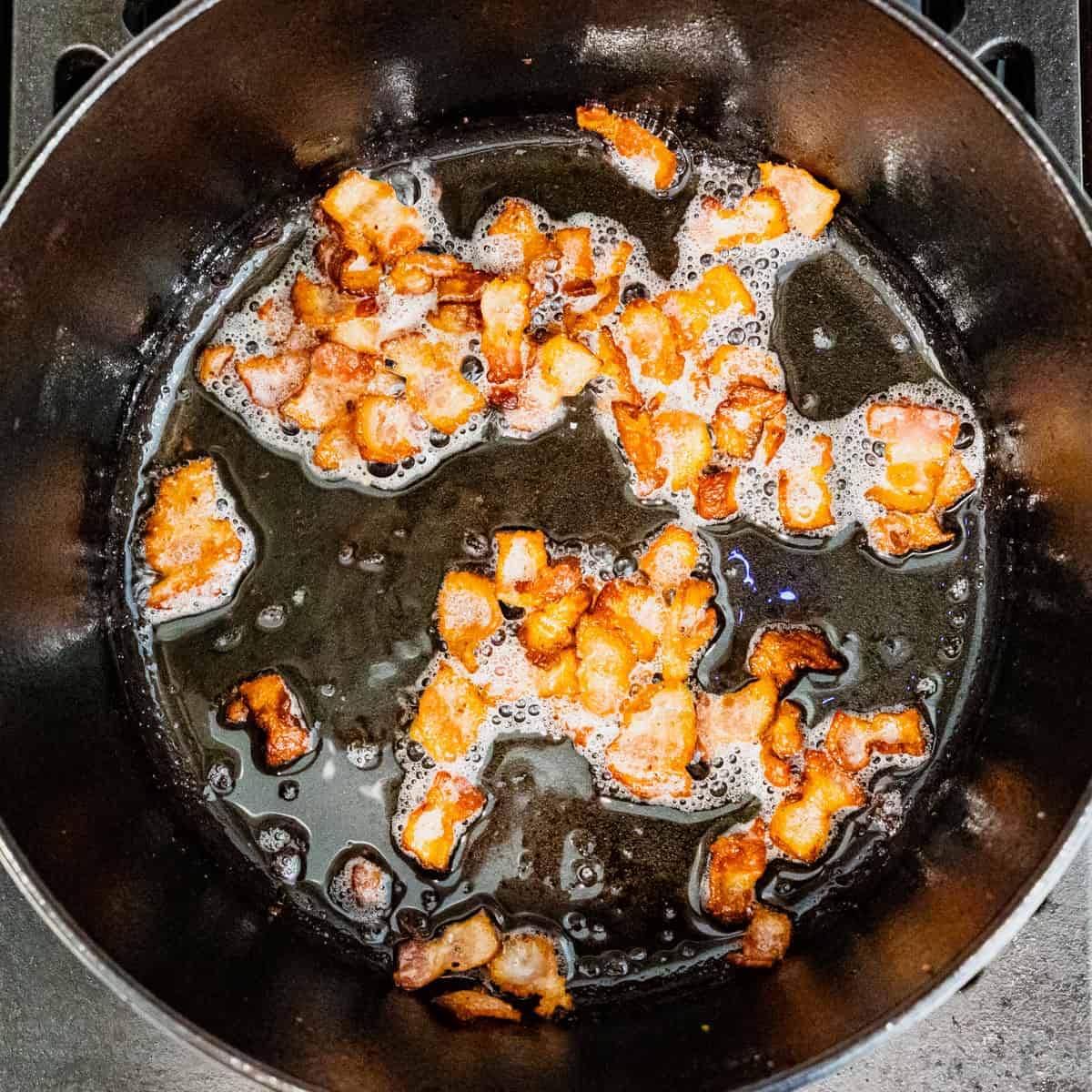
- Prep the smoker and cook the bacon: Preheat your smoker to 225℉. Set a 5-quart cast iron Dutch Oven or a 12-inch cast iron skillet on your stove over medium heat, then add the bacon strips and cook for 5 minutes, stirring occasionally, until crispy.
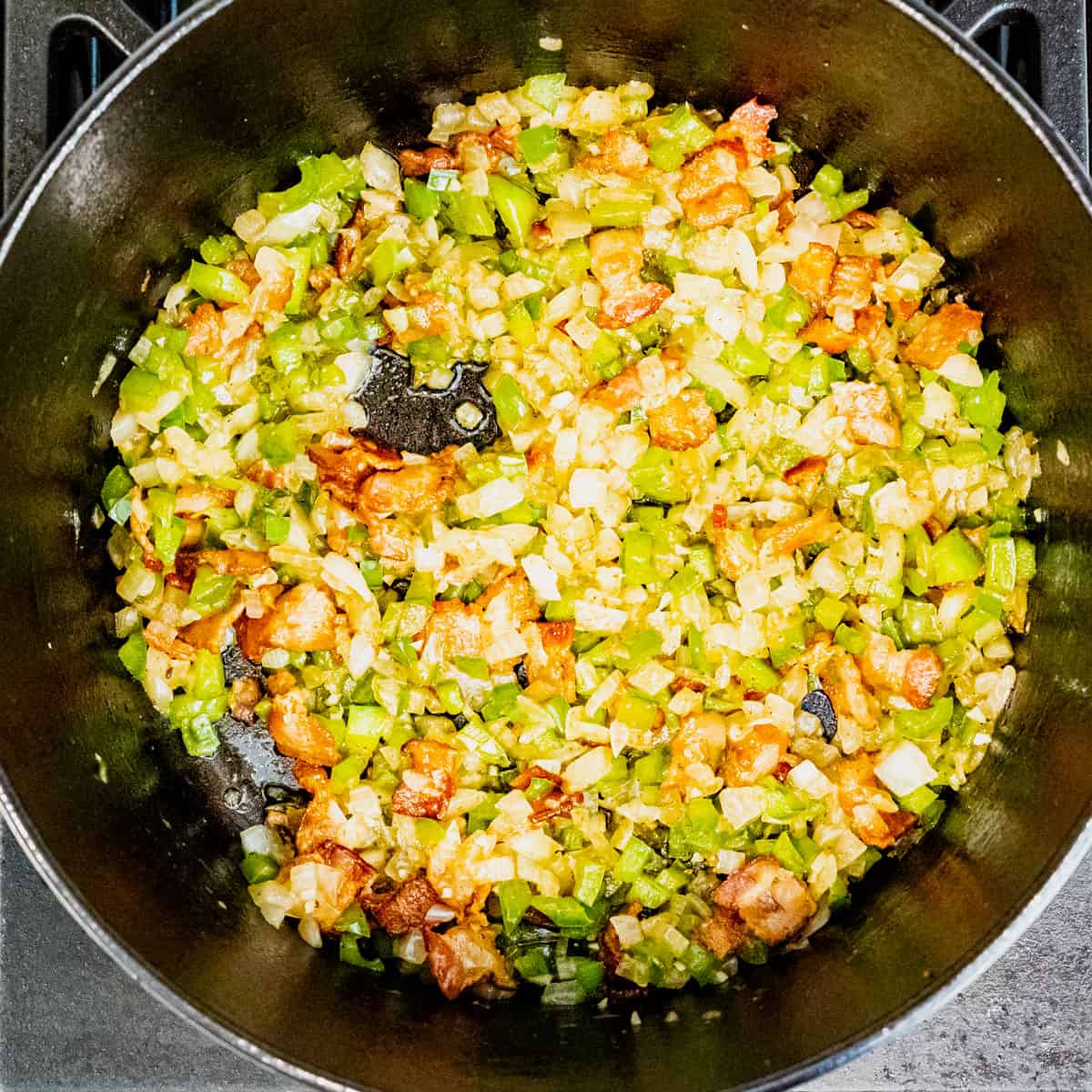
- Cook the vegetables: Add the diced onion and green pepper to the bacon and cook for 3 to 4 minutes, until softened. Stir in the garlic and cook for another minute.
- Mix in the sauce: Turn off the heat. Add the brown sugar, maple syrup, BBQ sauce, ketchup, Dijon mustard, apple cider vinegar, and BBQ rub. Stir until everything is well combined.
- Add the beans: Add the drained and rinsed navy beans and gently stir until they are evenly coated in the sauce.
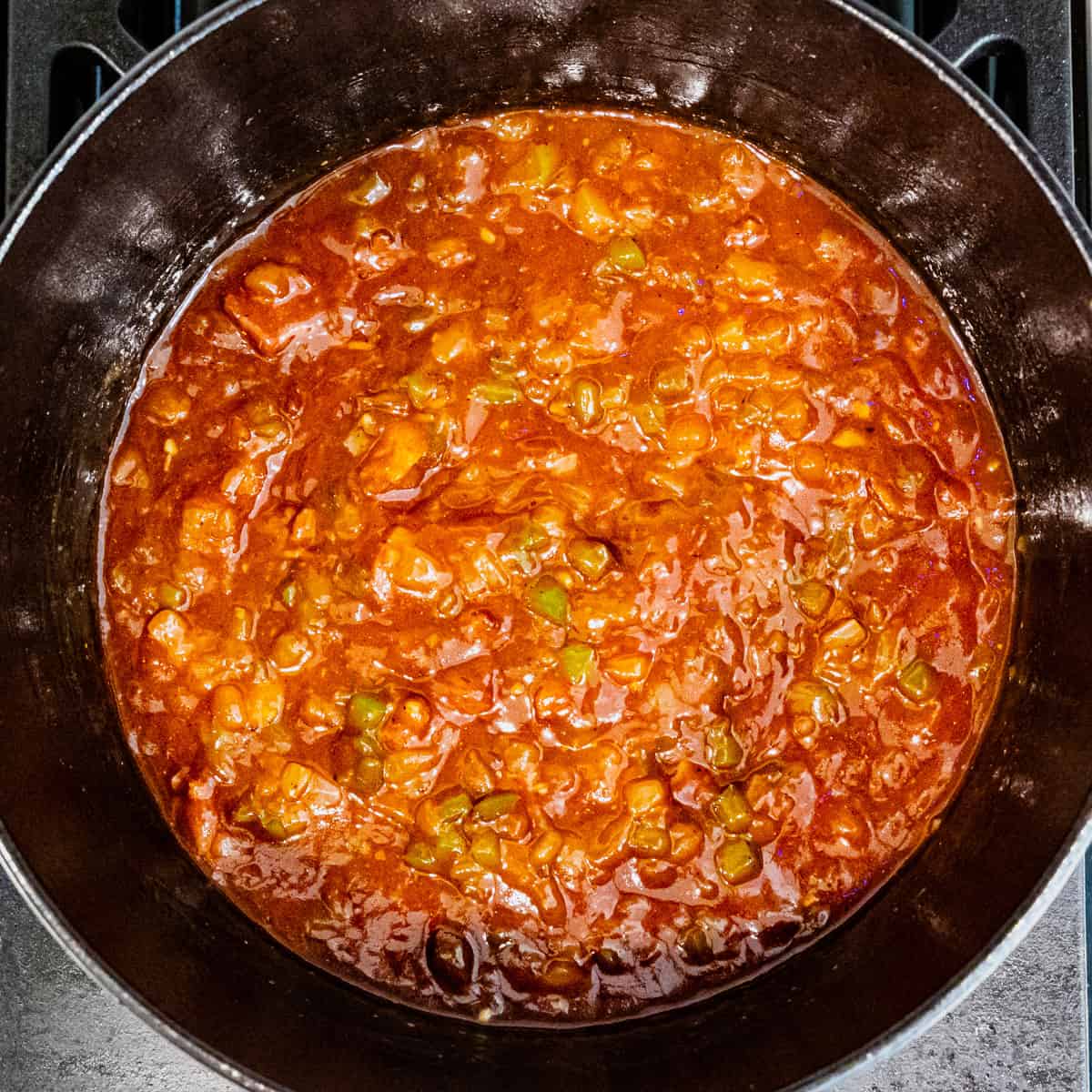

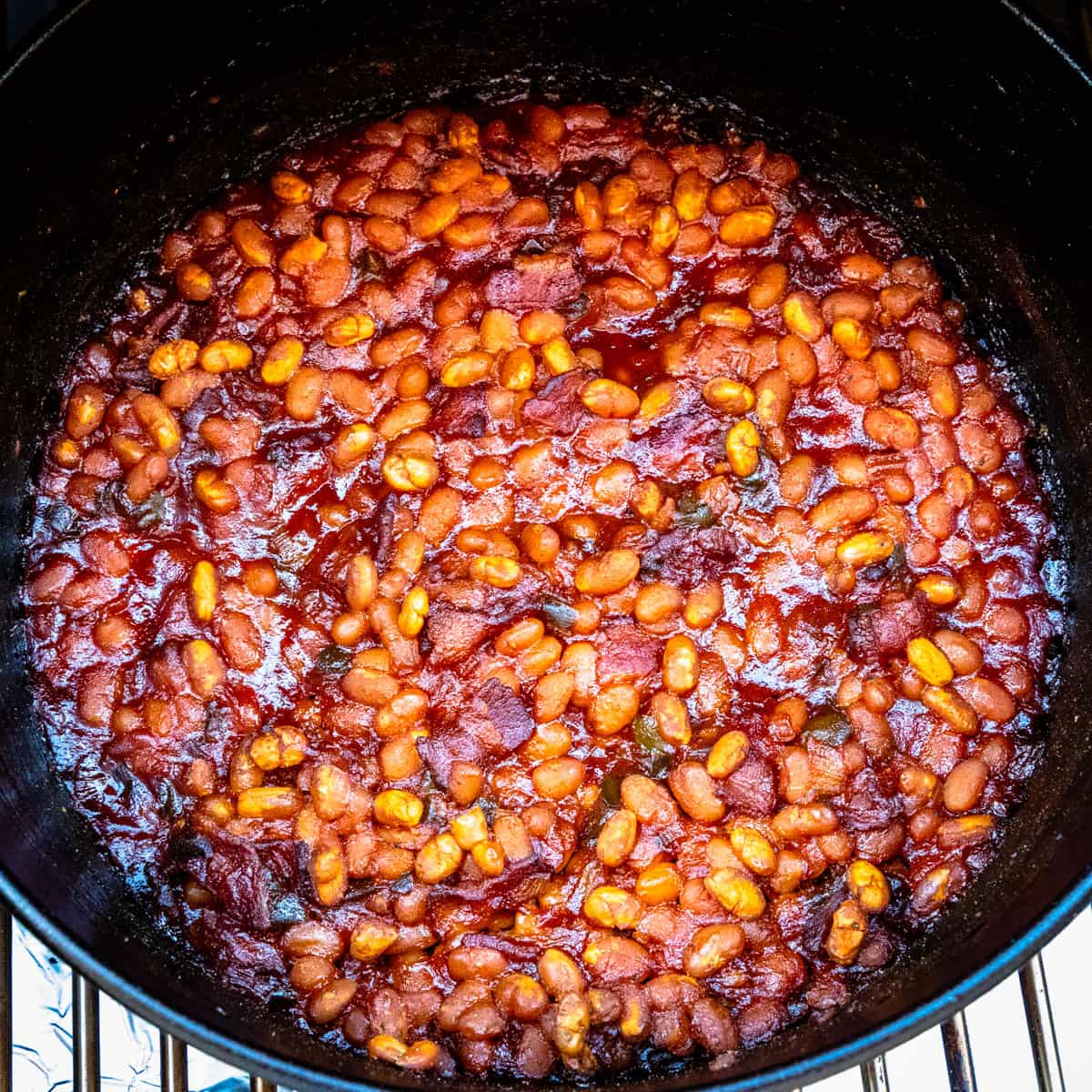
- Smoke the beans: Transfer the Dutch oven or skillet to the smoker and cook uncovered for 2 to 3 hours, stirring every 30 to 45 minutes, until the beans are hot, smoky, bubbly, and thickened to your liking.
- Rest and serve: Let the beans cool for about 10 minutes before serving. The sauce will thicken a little more as they sit.
What Wood to Use for Smoked Beans
I like using a blend of hickory and applewood for smoked baked beans. Hickory adds classic BBQ smoke flavor, while applewood gives a milder, slightly sweet smoke that works well with the maple syrup and bacon.
Cherry, oak, and pecan are also good options. I would avoid using too much mesquite because it can overpower the beans during a longer cook.
Check out our Beginner's Guide to Smoking for a breakdown of the flavor profile of different types of wood for smoking.
Tips for the Best Smoked Baked Beans
- Cook uncovered. Leaving the pan uncovered lets the beans pick up smoke and helps the sauce thicken.
- Stir occasionally. Stir every 30 to 45 minutes so the beans cook evenly and more of them get exposed to the smoke.
- Cook until thickened. The beans are done when they're hot and bubbly and the sauce has thickened to your liking. If they still seem thin, keep smoking a little longer.
- Use a sauce you like. The BBQ sauce flavor comes through, so choose one you'd already want to eat.
- Watch the salt. Bacon, beans, BBQ sauce, and ketchup can all add salt, so taste before adding more at the end.
Storage and Reheating
- Store leftovers in an airtight container and refrigerate for up to 5 days.
- Reheat leftovers in a pot over medium heat. The beans will thicken when refrigerated, so you can stir in a splash of water to help loosen them up if desired. Smaller portions can be reheated in the microwave.
Can You Make Smoked Baked Beans Ahead?
Yes. These beans are great for making ahead because the flavor gets even better after they sit.
You can smoke them a day ahead, refrigerate, then reheat gently on the smoker, stovetop, or in the oven before serving. Add a splash of water, broth, or BBQ sauce if the sauce gets too thick.
What to Serve with Baked Beans
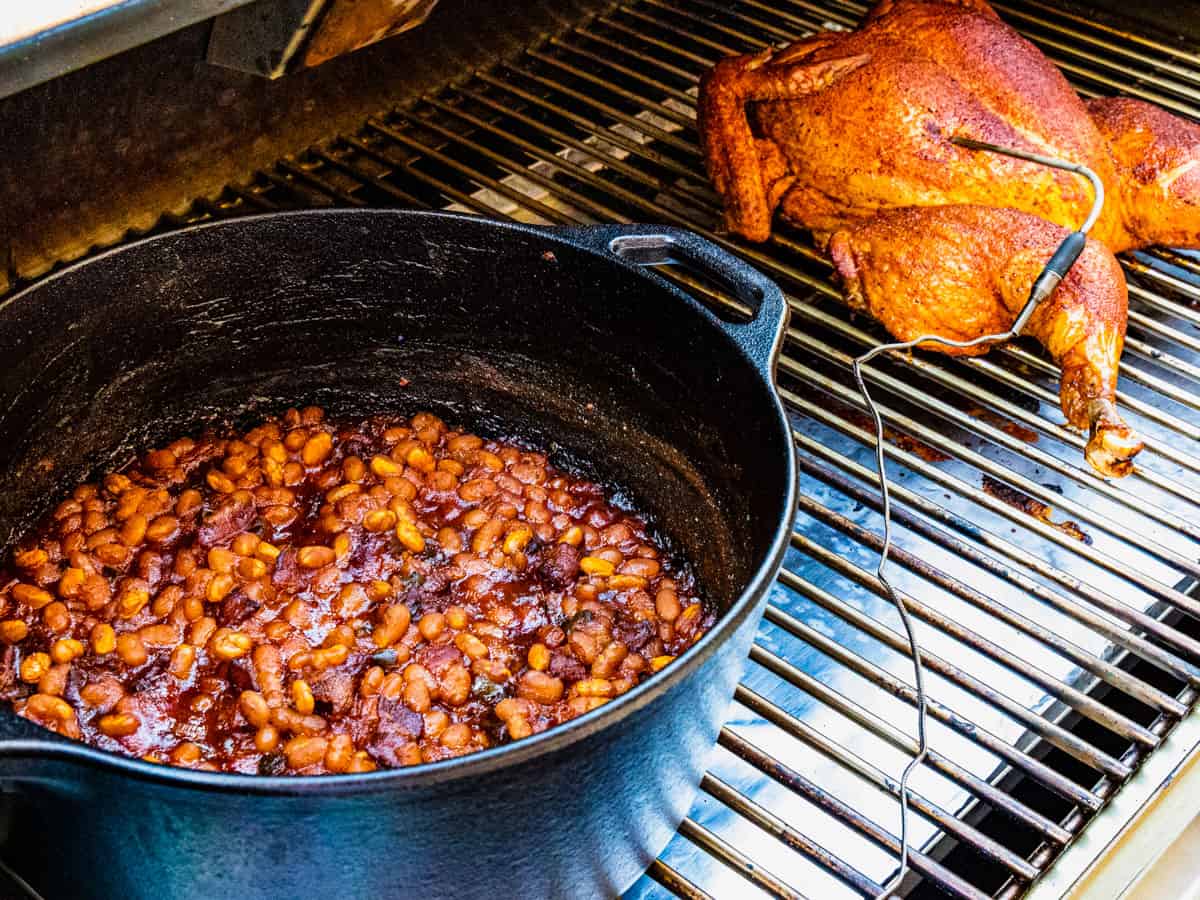
Smoked baked beans are one of those classic BBQ sides that belong on just about every cookout plate.
Serve them with:
- Smoked Pulled Pork Barbecue
- Smoked St. Louis Spare Ribs
- Smoked Whole Chicken
- Grilled BBQ Chicken Legs
- Smoked Chuck Roast
- Southern Coleslaw
- Southern Potato Salad
- Hawaiian Mac Salad
- Smoked Gouda Mac and Cheese
They're also great with burgers, hot dogs, smoked sausage, grilled pork chops, and BBQ sandwiches.
No Smoker? Try These Cooking Options
Oven
Prepare the beans as directed, then transfer them to a baking dish or leave them in an oven-safe Dutch oven. Bake uncovered at 350°F for 60 to 90 minutes, stirring once or twice, until hot, bubbly, and thickened.
Stovetop
Prepare the beans as directed, then simmer over low heat for 30 to 60 minutes, stirring occasionally, until thickened. You will not get the same smoke flavor, but you can add a small splash of liquid smoke if desired.
Grill
Set up your grill for indirect heat around 250°F to 300°F. Place the pan on the cooler side of the grill and cook uncovered until the beans are hot, smoky, and thickened.
Frequently Asked Questions
Yes, if you don't have a Dutch Oven, you can prepare the stove-top portion in a regular pot or a large skillet and transfer the bean mixture to a foil pan for the smoking phase.
Navy beans are a classic choice because they are small and tender. Great Northern beans, cannellini beans, or pinto beans also work well.
Yes. You can bake them in the oven, simmer them on the stovetop, or cook them on a grill with indirect heat. Add a small amount of liquid smoke for an extra smoky flavor.
Cook them uncovered and stir occasionally. The longer they cook, the thicker the sauce will become. They will also thicken slightly as they cool.
Yes. Make them up to 1 day ahead, refrigerate, and reheat gently before serving. Add a splash of water, broth, or BBQ sauce if needed.
More Side Dish Recipes



📖 Recipe
Smoked Baked Beans
Equipment
- Cast Iron Dutch Oven or 12 inch cast iron skillet
Ingredients
- 6 slices bacon, cut into ½ inch strips
- 1 medium yellow onion, diced
- 1 medium green pepper, diced
- 1 clove garlic, minced
- ½ cup light brown sugar
- ¼ cup maple syrup
- ½ cup BBQ sauce
- ½ cup ketchup
- 1 tablespoon dijon mustard
- 2 tablespoons apple cider vinegar
- 1 tablespoon BBQ Rub
- 3 16 oz cans Navy beans, rinsed and drained
Instructions
- Preheat your smoker to 225°F to 250°F.
- Set a 5-quart cast iron Dutch oven or 12-inch cast iron skillet over medium heat. Add the bacon and cook for 5 minutes, stirring occasionally, until crispy.
- Add the onion and green pepper and cook for 3 to 4 minutes, until softened. Add the garlic and cook for 1 minute.
- Turn off the heat. Stir in the brown sugar, maple syrup, BBQ sauce, ketchup, Dijon mustard, apple cider vinegar, and BBQ rub until well combined.
- Add the drained and rinsed navy beans and gently stir to coat.
- Transfer the Dutch oven or skillet to the smoker and cook uncovered for 2 to 3 hours, stirring every 30 to 45 minutes, until hot, smoky, bubbly, and thickened.
- Let cool for 10 minutes before serving.
Notes
- If you do not have a Dutch oven, prepare the stovetop portion in a pot or skillet, then transfer the beans to a foil pan for smoking.
- Cook uncovered so the beans absorb smoke and the sauce thickens.
- The beans will thicken as they cool and again after refrigerating.
- Reheat with a splash of water, broth, or BBQ sauce if needed.
- Store leftovers in an airtight container in the refrigerator for up to 5 days.
- Add jalapeño, smoked sausage, pulled pork, or brisket for a heartier version.
Nutrition
* All nutrition information we provide are estimates based on third party calculators. We encourage you to calculate these on your own for accurate results.

Leave a Reply