
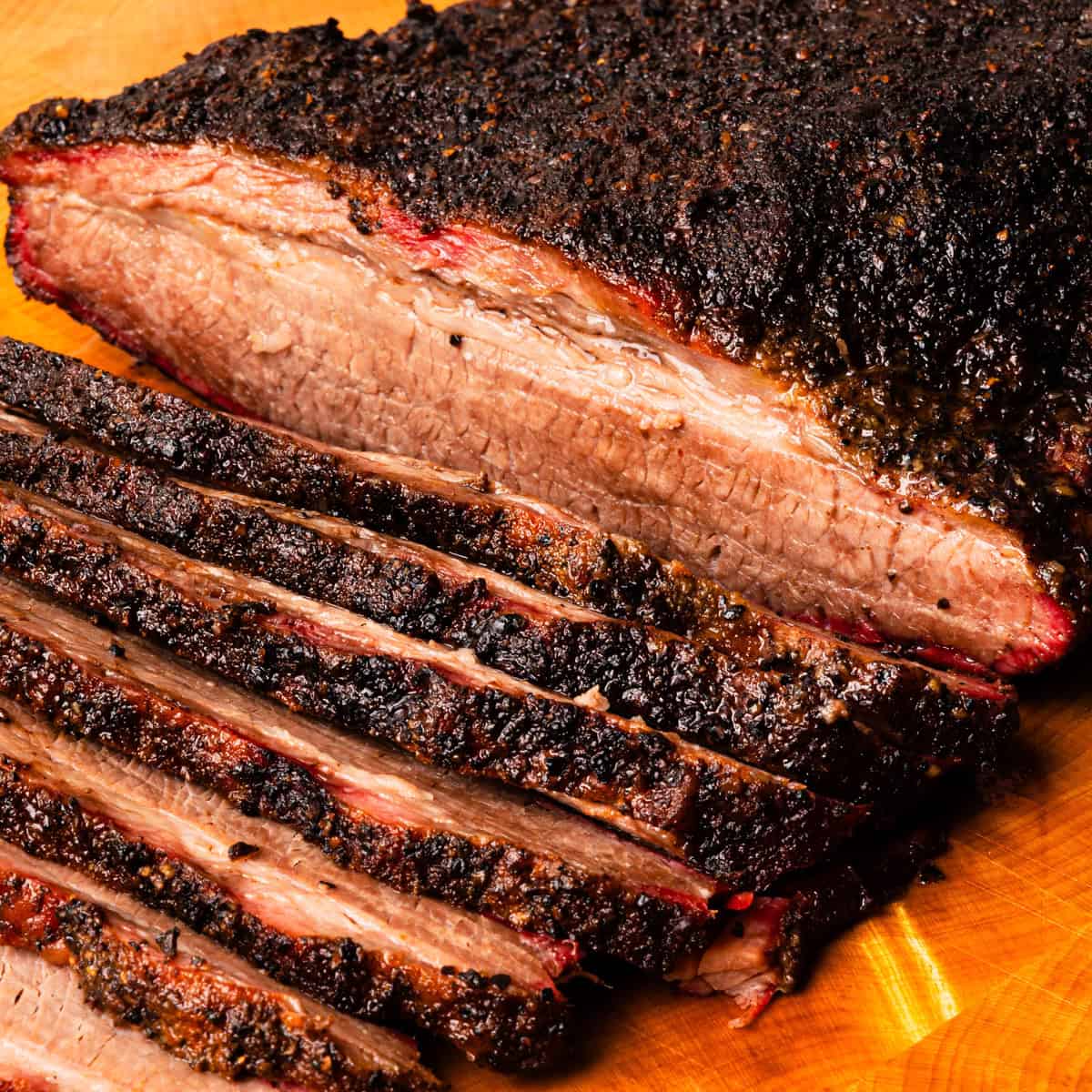
If you're craving tender, smoky brisket but don't want to commit to a massive whole packer cut, the brisket flat is your best friend. Lean, flavorful, and quicker to cook than its fattier counterpart, the flat delivers all the BBQ goodness with a little less fuss.
This recipe walks you through exactly how to prepare, smoke, and serve a brisket flat that's juicy, tender, and packed with flavor-perfect for weekend gatherings or meal prep for the week ahead.
Jump to:
- Why this Recipe Works
- Brisket Cuts Explained: Flat vs Point vs Whole Packer
- How to Choose the Best Brisket Flat for Smoking
- Ingredient Notes
- How to Smoke a Brisket Flat (Step-by-Step)
- Expert Tips
- What to Serve with Smoked Brisket
- Storage and Reheating Instructions
- Frequently Asked Questions
- More Smoker Recipes
- 📖 Recipe
- You May Also Like
Smoking a brisket flat doesn't need to be intimidating. With proper preparation, simple seasoning, a slow and steady cook, and plenty of resting time, you'll end up with tender, flavorful brisket every time.
And for a super quick and easy brisket in just 90 minutes, check out my Instant Pot Brisket recipe!
Why this Recipe Works
- Lean but flavorful: The brisket flat is less fatty than the point, but still turns out tender and juicy when cooked low and slow.
- Simple seasoning: A classic salt-and-pepper rub lets the beef shine, with a hint of garlic powder to enhance the flavor.
- Flexible cooking: Works on any smoker, or even on a gas/charcoal grill with a little setup.
- Great for leftovers: Slice it for dinner, then repurpose extras into tacos, sandwiches, or chili.
Brisket Cuts Explained: Flat vs Point vs Whole Packer
Understanding the different parts of brisket helps you choose the right cut for your cooking style:
- Whole Packer Brisket: The entire brisket, usually 12-16 pounds, made up of both the point and the flat. This is the traditional competition-style brisket you often see in BBQ contests.
- Brisket Point: The thicker, fattier end of the brisket. Rich in marbling, it's known for being juicy and full of flavor, but it takes longer to cook. Burnt ends are often made from the point.
- Brisket Flat: The leaner, thinner end. Usually 4-8 pounds, it slices beautifully and cooks faster than a whole packer. Because it has less fat, it benefits from careful smoking and proper resting.
How to Choose the Best Brisket Flat for Smoking
Not all brisket flats are created equal-here's what to look for at the butcher counter:
- Weight: Aim for a flat that's around 6-7 pounds.
- Thickness: Look for a flat that's fairly even in thickness from one end to the other. Avoid cuts that taper to a very thin edge, as these areas can dry out during smoking.
- Fat Cap: A thin layer of fat (about ¼ inch) helps keep the meat moist. Trim if it's too thick, but don't remove it completely.
- Color: Choose brisket with bright red meat and creamy white fat for freshness.
- Grade: Choice grade beef works well, but prime grade is more forgiving and more flavorful because of the extra marbling. At my local butcher, the price is only one to two dollars more for prime, so I recommend using prime-grade beef if possible.
Ingredient Notes
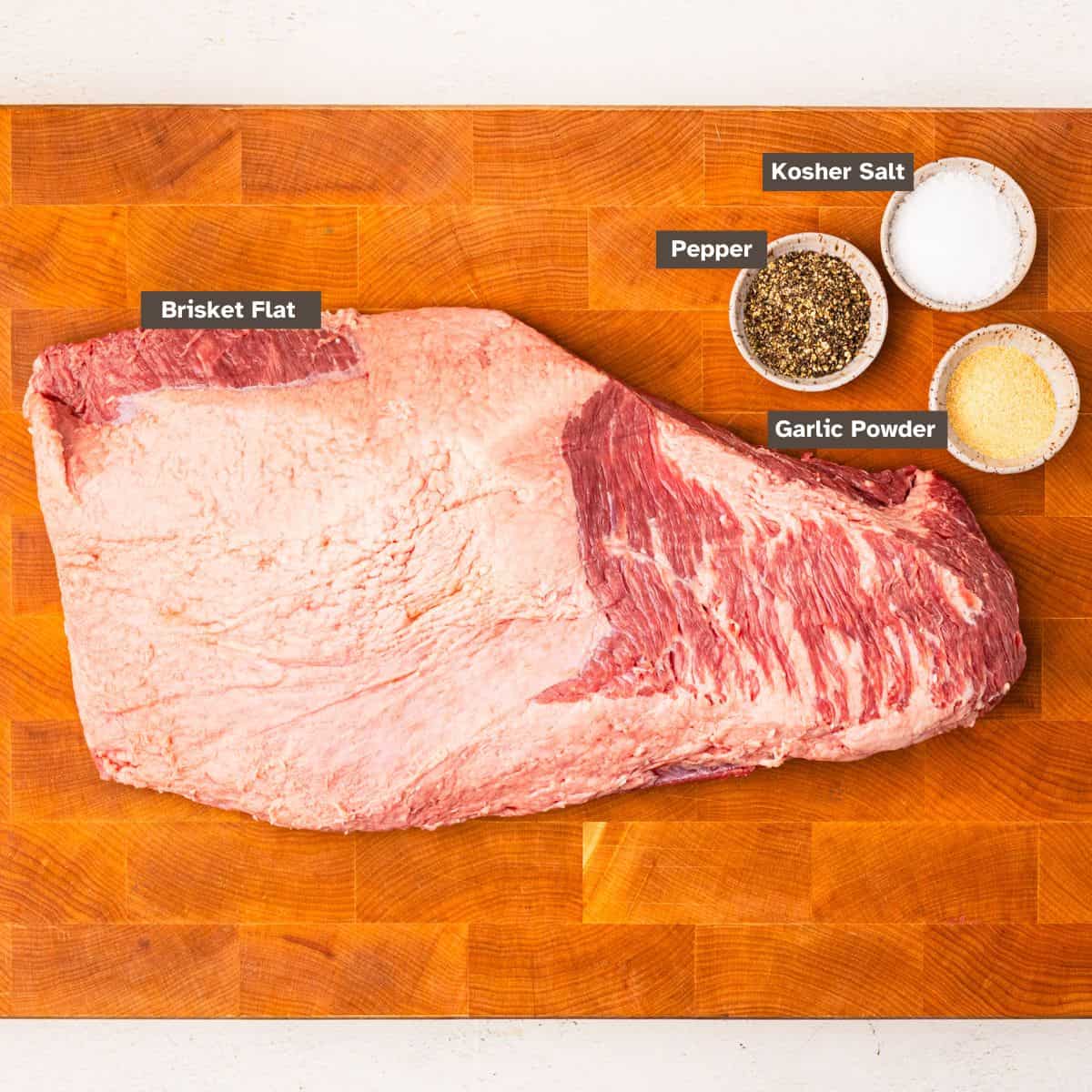
- Brisket Flat: Refer to the notes above for selecting your brisket flat.
- Kosher Salt, Coarse Black Pepper, Garlic Powder: This classic Texas brisket rub adds a ton of flavor to complement the richness of the beef and the smoky flavors from the grill.
- Wood: Oak or Hickory work well to provide a rich, smoky flavor without overpowering the beef.
See the recipe card at the bottom of this post for the complete list of ingredients and measurements.
How to Smoke a Brisket Flat (Step-by-Step)
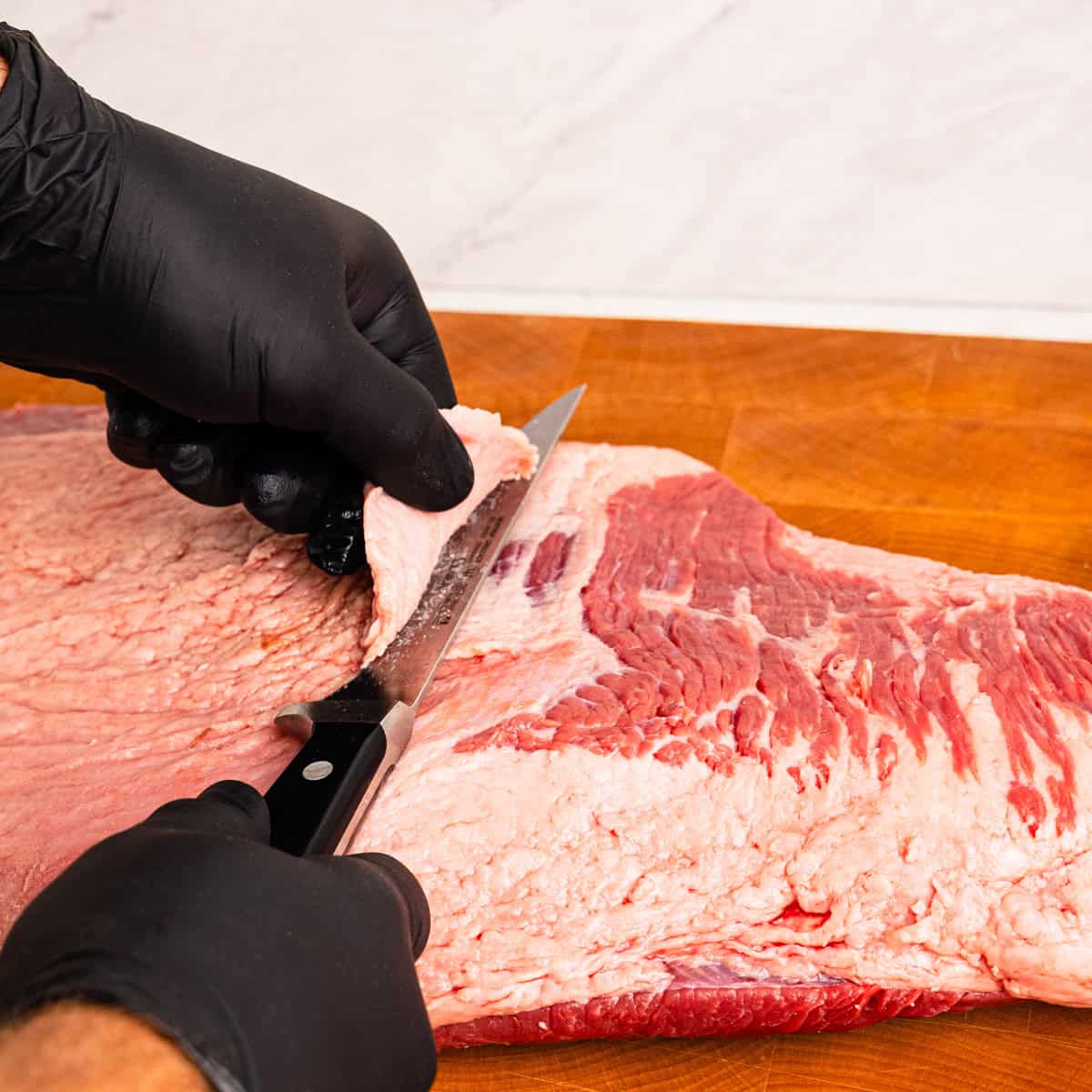
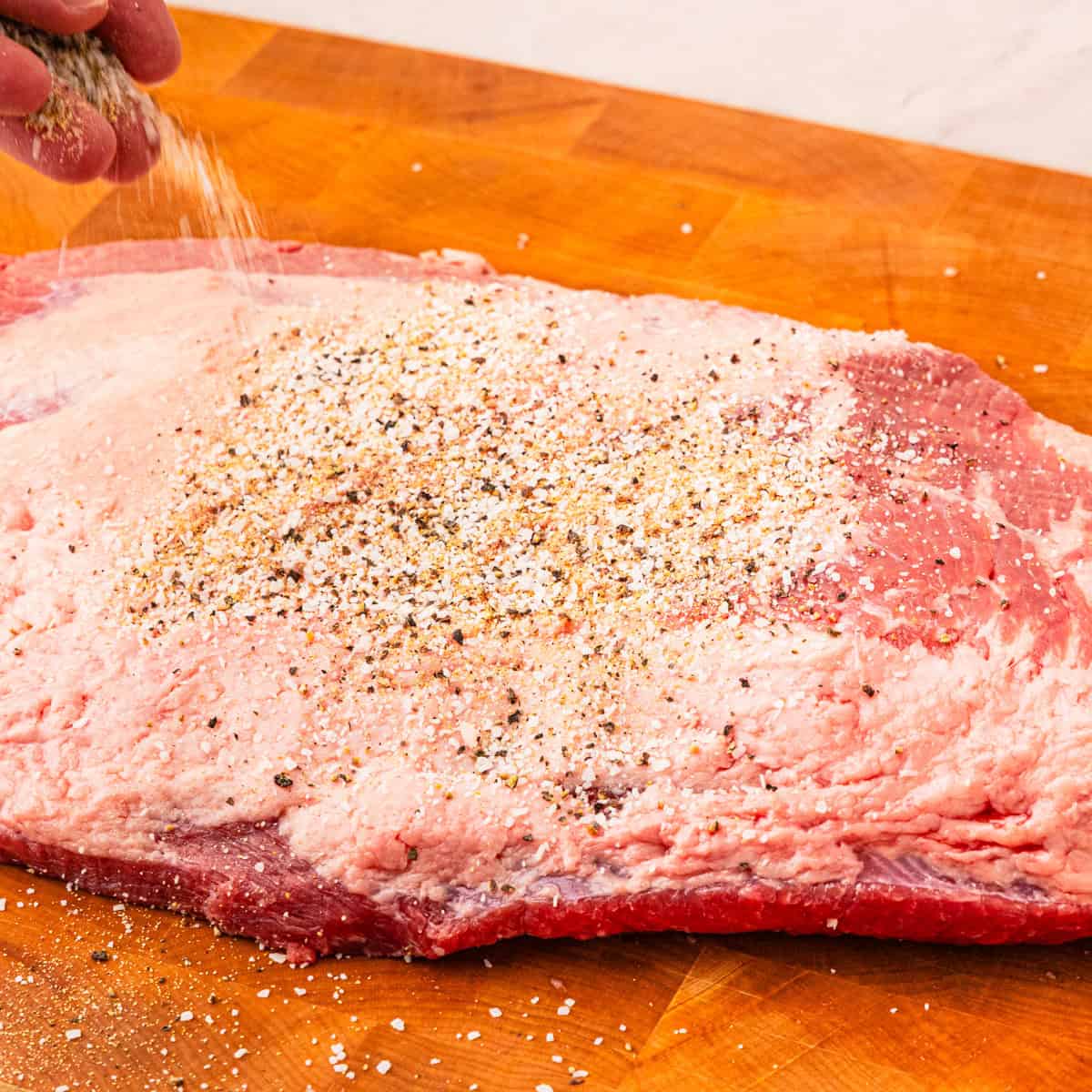
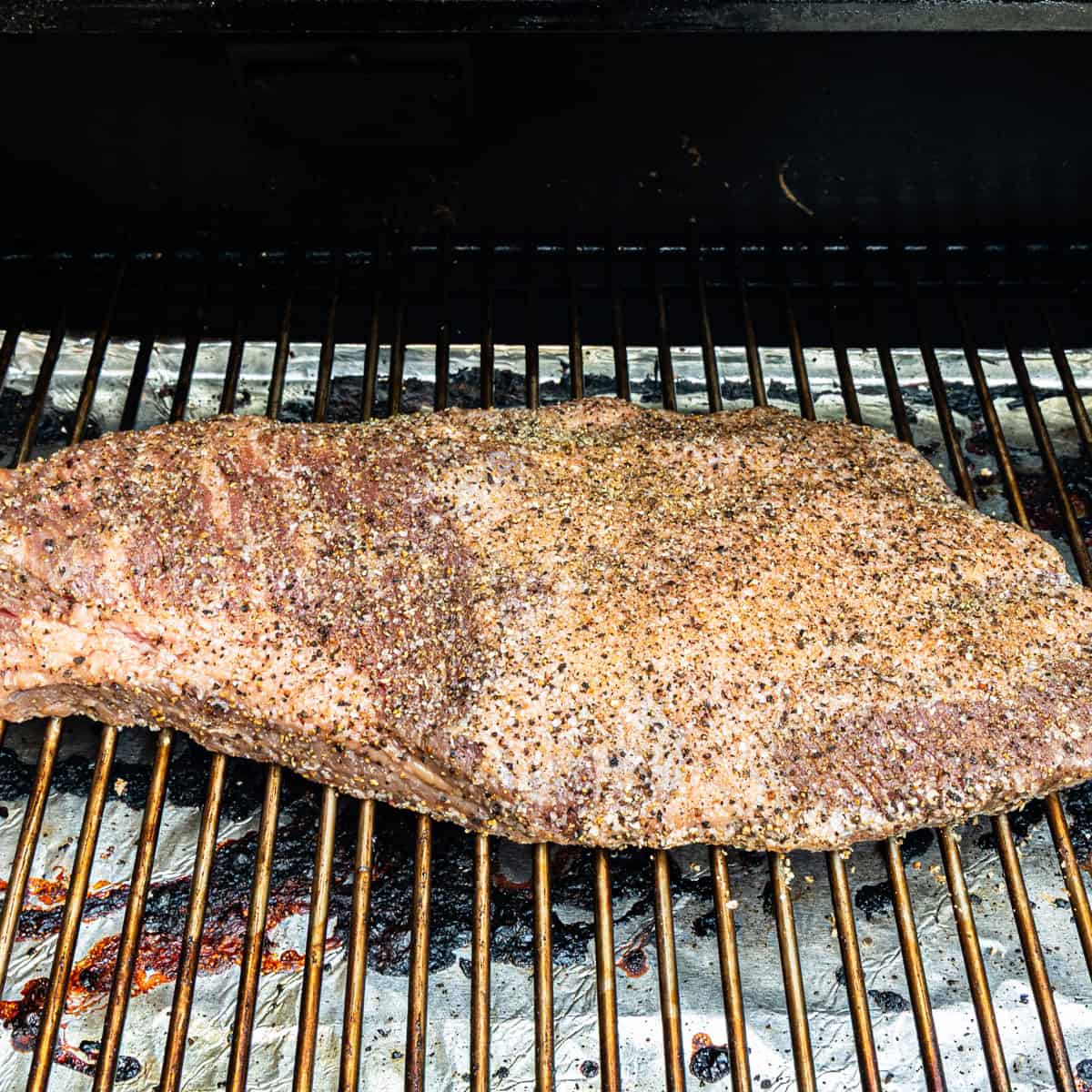
- Trim & Season: Trim off any fat pockets and trim the fat cap to about a ¼-inch layer. Trim off any very thin ends and square the meat up so there are no thin points, which will dry out. Combine the salt, pepper, and garlic powder, and season the meat generously on all sides.
- Set Up the Smoker: Preheat your smoker to 250°F, then add your wood. If using a gas or charcoal grill, arrange for indirect heat and add soaked wood chips in a smoker box or wrapped in a foil pouch with holes poked in it. If using a pellet grill, I recommend using a smoke tube with wood chips to add more smoke.
- Cook the Meat: Place the brisket fat side up and smoke until the internal temperature reaches 155-160°F. Wrap the brisket tightly in foil or butcher paper to help it cook faster and retain moisture. This is known as the "Texas crutch". You can increase the heat to 275°F at this stage to further reduce the cooking time.
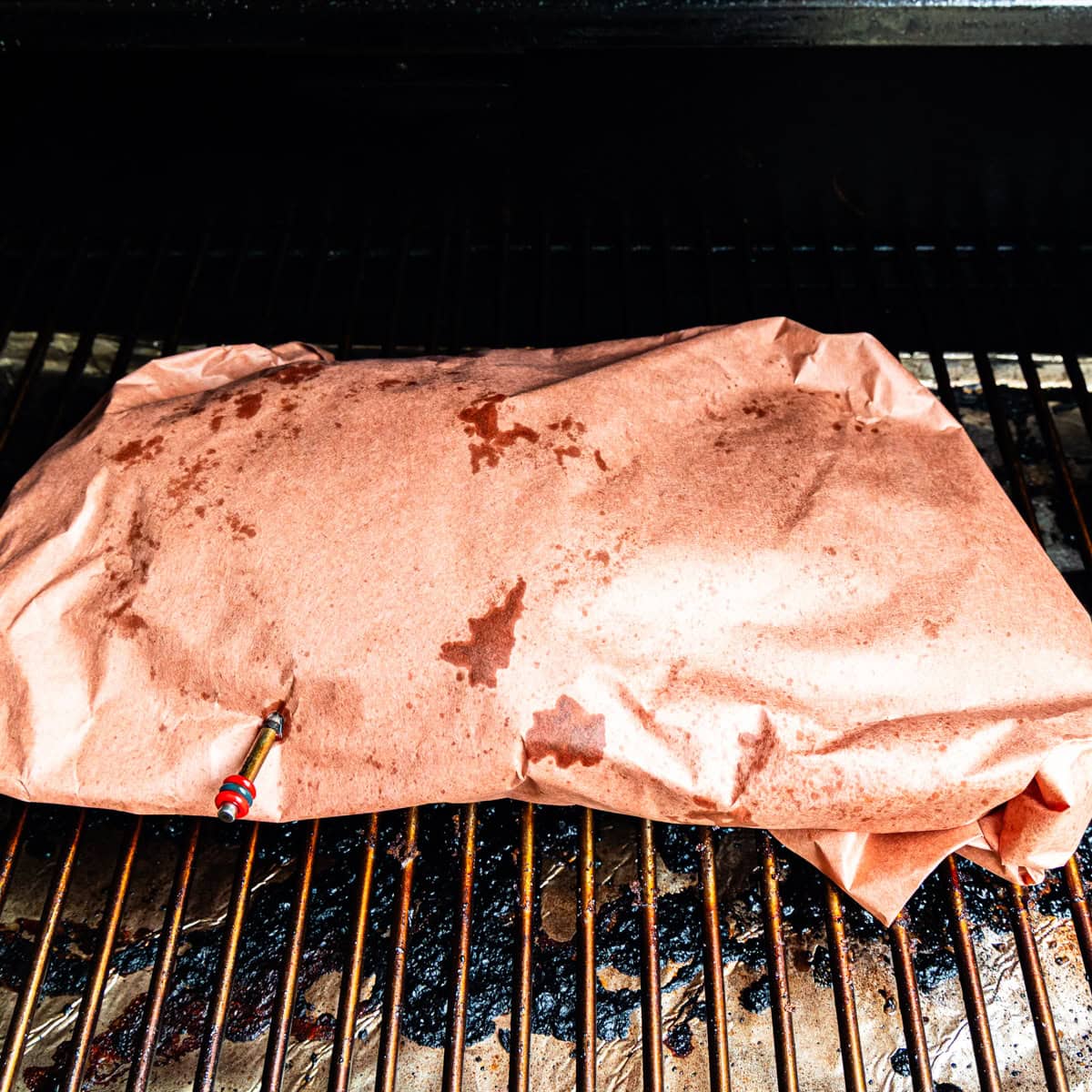
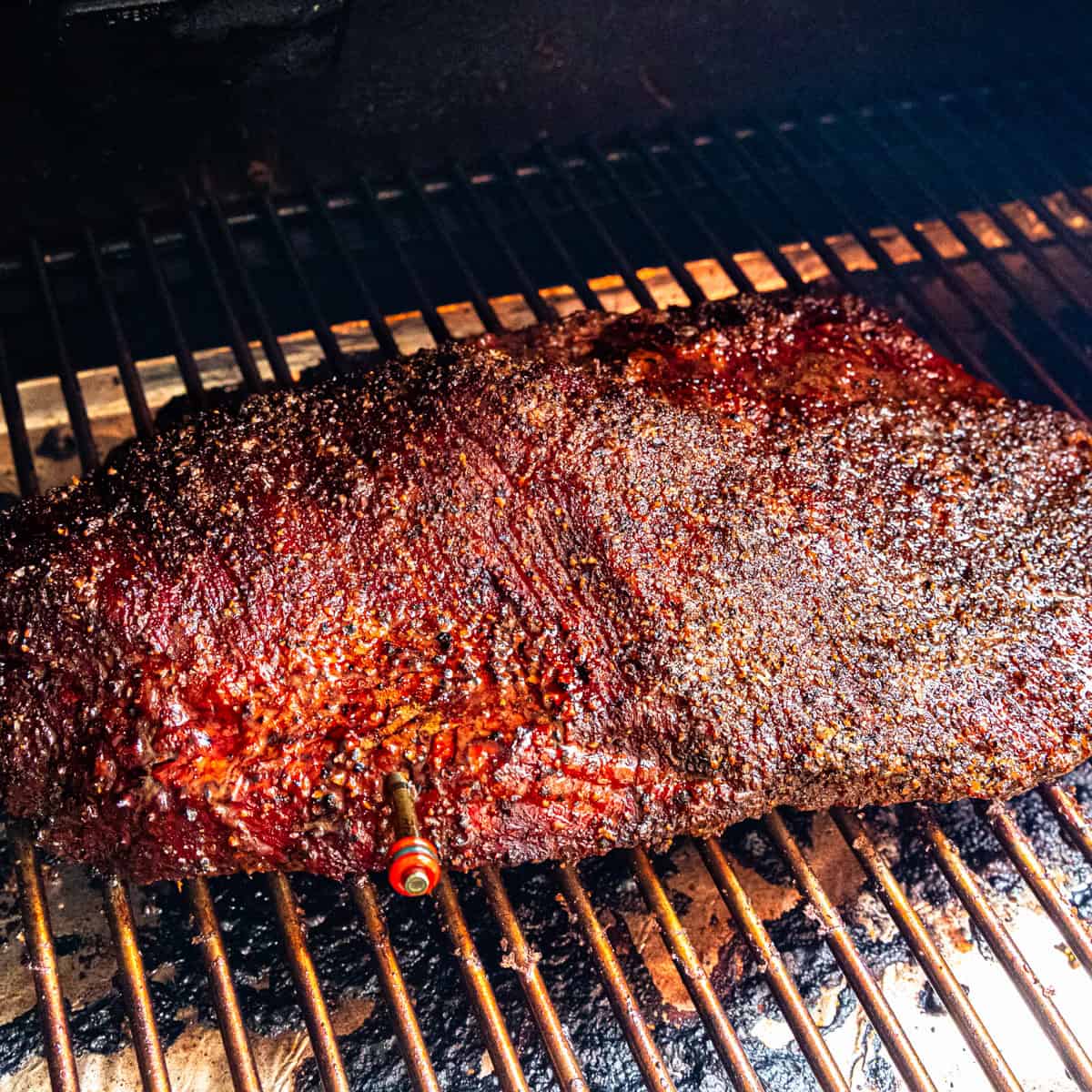
- Finish the Brisket: Continue cooking until the internal temperature reaches 200°F to 210°F. The meat should offer almost no resistance when pierced with a meat thermometer. Plan on 6 to 8 hours of total cooking time.
- Rest the meat: Transfer the meat to a large cutting board or rimmed baking sheet and tent with foil for around 30 minutes. If you need to rest the meat longer, wrap it tightly and place it in an empty cooler and cover with towels for up to 2 hours.
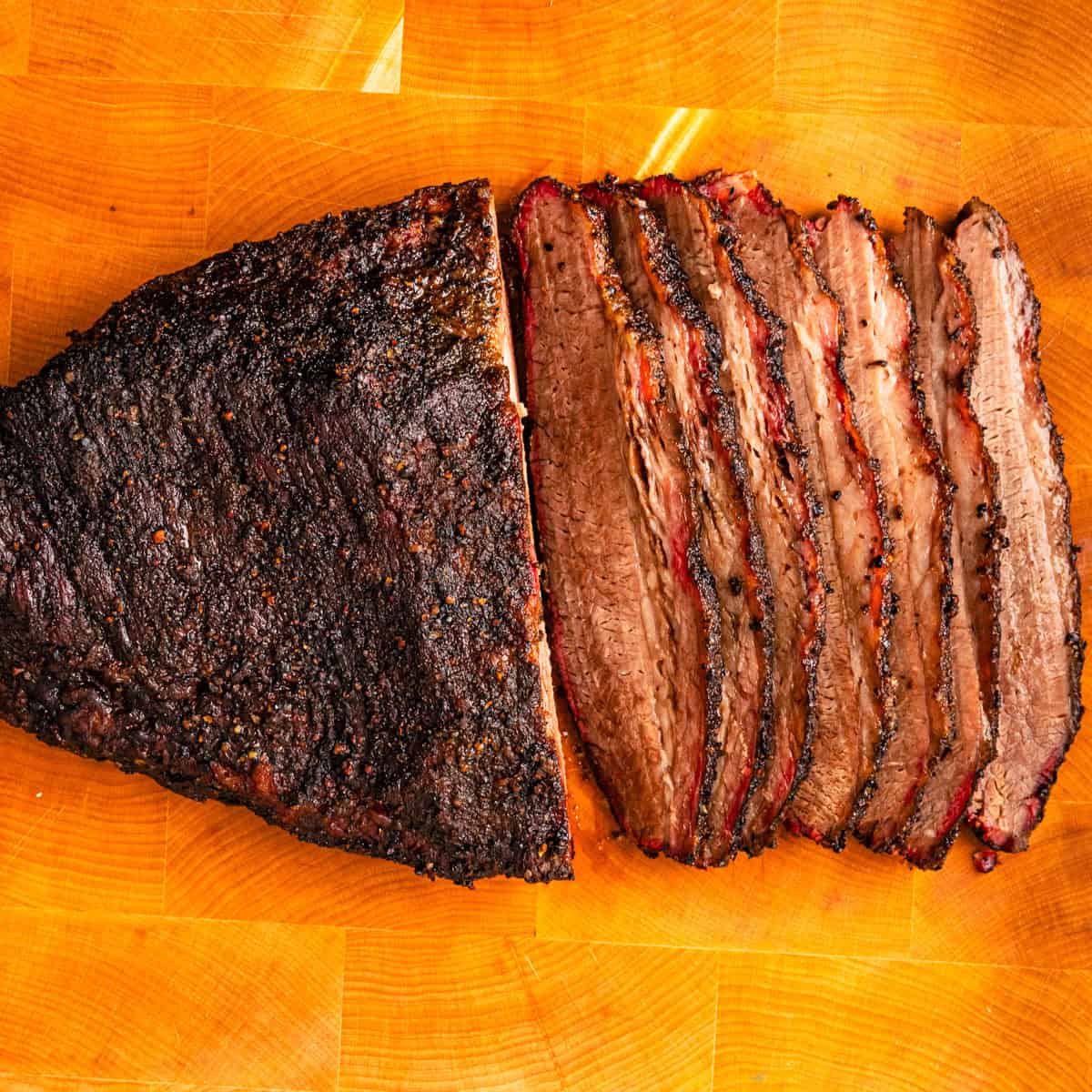
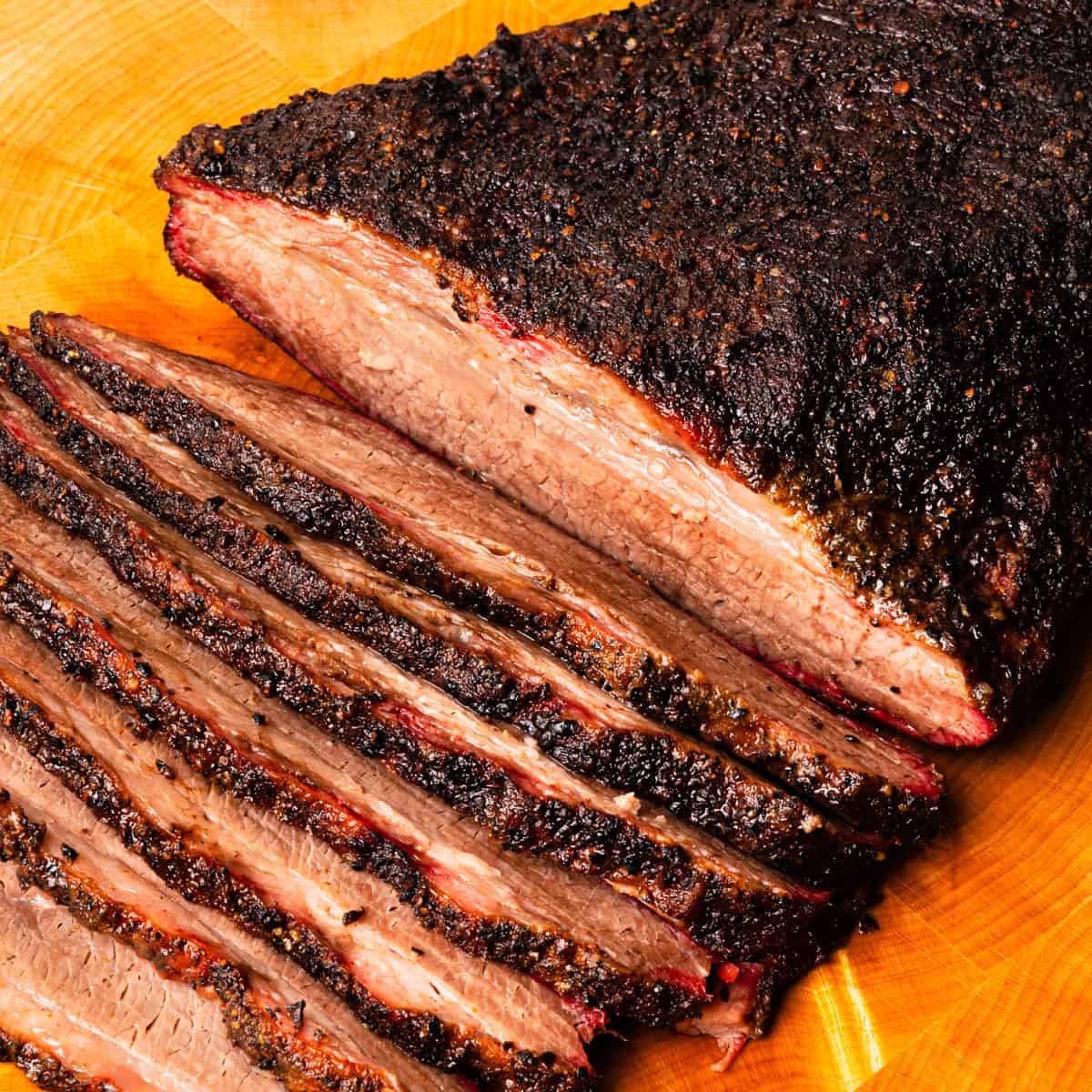
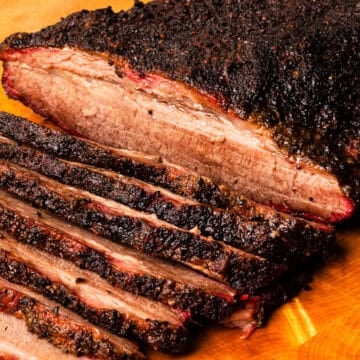
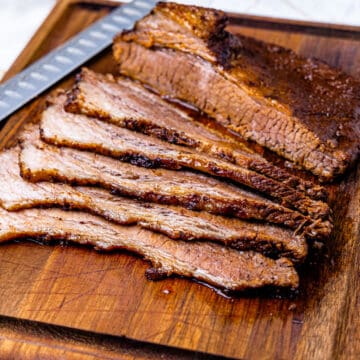
- Slice the Brisket: Cut slices around ¼ inch thick, going against the grain.
Expert Tips
- Hold steady temps: Avoid opening the smoker to check on the meat as it cooks.
- Use a high-quality thermometer: Use a reliable digital thermometer to track the internal temperature of the meat as it cooks. I use the RFX wireless probe for Thermoworks to easily track the temp on my phone during the cook. At the end of the cooking process, I check the meat in several places with my Thermoworks Thermapen to ensure it's cooked properly throughout.
- Don't skip the rest: Resting time is just as important as smoking-it allows the muscle fibers to relax and the juices to redistribute within the meat, preventing dryness.
What to Serve with Smoked Brisket
This Texas style smoked brisket flat is perfect with my smoked gouda mac and cheese and my smoked baked beans. And for a creamy side, you can't go wrong with my Southern-style potato salad or cole slaw.
Storage and Reheating Instructions
Store leftovers in an airtight container and refrigerate for up to 4 days.
The smoked brisket can be wrapped tightly in plastic and foil and frozen for up to 3 months.
To reheat, wrap the brisket in foil and place it in a baking dish. Heat in a 275°F oven for 12-15 minutes or until warmed through. Individual portions can be reheated in the microwave.
Frequently Asked Questions
An average 5-to 6-pound brisket flat takes about 6 to 8 hours at 225°F. The exact time depends on the cut of meat and consistency of your smoker temperature. Always cook to internal temperature rather than by time.
The flat is leaner and slices neatly, making it ideal for sandwiches and serving as the main dish. The point is fattier, juicier, and often used to make burnt ends. A whole packer brisket includes both cuts.
Hickory and oak are classic choices for a strong, traditional BBQ flavor. For a slightly sweeter smoke, try apple or cherry wood. Many pitmasters blend woods for a balanced flavor.
Because the flat is leaner, it's more prone to drying out. Wrapping the meat in foil or butcher paper (the "Texas Crutch") helps lock in moisture once the internal temperature reaches 155-160°F. A proper resting period after cooking also keeps juices inside. You can also keep a spray bottle of apple juice handy to spray any dry places during the cooking process.
More Smoker Recipes


📖 Recipe
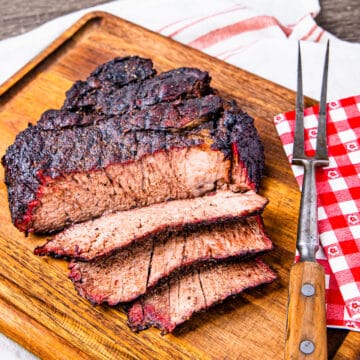
Smoked Brisket Flat Recipe
Ingredients
- 6-7 pound brisket flat, trimmed
- 2 Tablespoons Kosher salt
- 1 Tablespoon coarse ground black pepper
- 2 teaspoons garlic powder
Instructions
- Prepare the brisket: Trim away any large fat pockets and thin edges, leaving about ¼ inch of fat on top. Square off the brisket to ensure even cooking. Combine the salt, pepper, and garlic powder, and season the meat generously on all sides.
- Heat the smoker: Preheat the smoker to 250°F. Add your preferred wood for smoke. For a gas or charcoal grill, set it up for indirect cooking and use soaked wood chips in a smoker box or foil pouch. Pellet grill users can enhance the smoke flavor with a smoke tube filled with chips.
- Begin smoking: Place the brisket on the grates, fat side up. Cook until the internal temperature reaches 155-160°F. At this point, wrap tightly in foil or butcher paper (the "Texas crutch"). If desired, raise the temperature to 275°F to shorten the cooking time.
- Cook to finish: Continue smoking until the brisket reaches an internal temperature of 200-210°F and feels tender when probed with a thermometer. Total cooking time will typically range from 6-8 hours.
- Rest the brisket: Remove the brisket from the heat, cover it with foil, and let it rest for 30 minutes. For a longer rest, wrap securely and place in an empty cooler with towels to hold heat for up to 2 hours.
- Slice and serve: Cut the brisket across the grain into ¼-inch slices and serve immediately.
Notes
Nutrition
* All nutrition information we provide are estimates based on third party calculators. We encourage you to calculate these on your own for accurate results.
Leave a Reply