
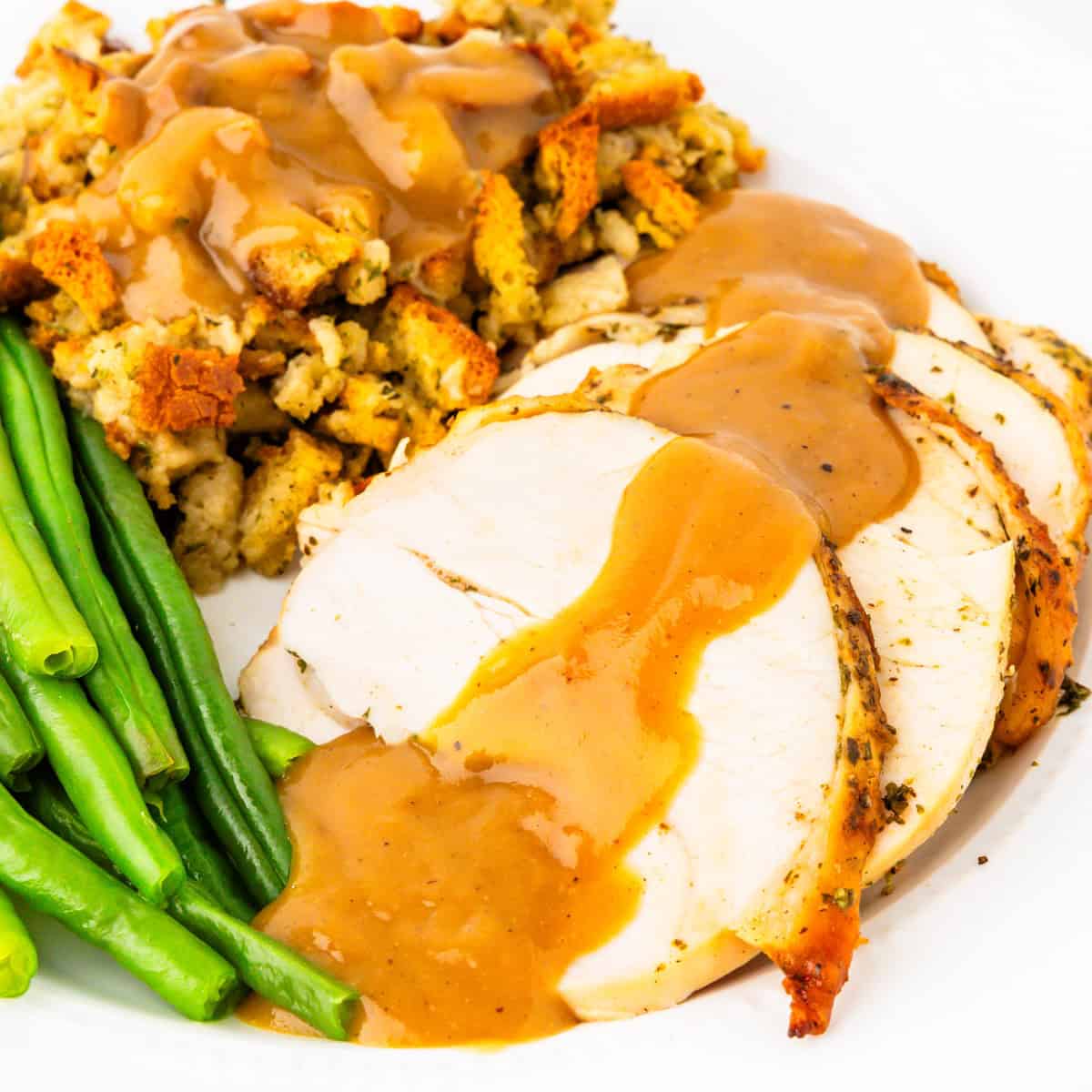
This make-ahead turkey gravy is rich, dark, and packed with roasted turkey flavor, and you don't need a single drop of pan drippings to make it! Turkey wings roast with onion, carrot, and celery, then simmer in chicken stock and get thickened with a golden butter roux. It's my answer for Thanksgiving, Friendsgiving, or any turkey dinner where the stovetop is already crowded.
Make it a couple of days early, and on the big day it just needs a quick reheat. Spoon it over turkey, mashed potatoes, and dressing, and nobody will guess it wasn't made from the bird on the table!
Jump to:
- Quick Look
- Why this Recipe Works
- Turkey Gravy Without Drippings: Where the Flavor Comes From
- Ingredient Notes
- Substitutions & Variations
- How to Make Make-Ahead Turkey Gravy
- Expert Tips
- Make-Ahead Tips
- Storage and Reheating
- What to Serve with Make-Ahead Turkey Gravy
- Frequently Asked Questions
- More Recipes
- 📖 Recipe
- You May Also Like
Quick Look
- Time: About 3½ hours, almost all of it hands-off roasting and simmering
- Key ingredients: Turkey wings, onion, carrot, celery, unsalted chicken stock, butter, and flour
- Flavor: Deep roasted turkey flavor with a savory, dark brown color
- Method: Roast the wings and vegetables, simmer them into a stock, then thicken it with a golden roux
- Serve with: Roast turkey, mashed potatoes, dressing, or biscuits
- Make-ahead: Keeps in the fridge for days and freezes well, so it's ready before the holiday rush
The secret here is that you build all the flavor drippings would give you, before the turkey ever goes in the oven. Two hours in the oven turns the wings a deep mahogany brown, and that color and flavor carry straight into the gravy.
On Thanksgiving, I usually make my gravy the day of using the turkey neck and backbone instead of wings, and I thicken it with cornstarch. Both swaps work great for this make-ahead version too.
If you make this gravy, I'd love to hear how it turned out! Leave a star rating and a comment below and let me know what you served it with.
Why this Recipe Works
- Turkey wings bring body. Wings are full of skin and connective tissue, which melts into gelatin as they simmer. That gives the gravy a silky texture, and it's why the gravy sets up thick in the fridge.
- A long roast builds the color. Two hours in a hot oven browns the wings and vegetables deeply, so the gravy turns out dark brown on its own. No browning sauce needed!
- Stock instead of water. Simmering the roasted wings in chicken stock instead of plain water means one hour on the stove is plenty to get a rich, full-flavored base.
- A toasty roux. Cooking the butter and flour until golden takes away the raw flour taste and adds a nutty flavor that tastes like it came from the roasting pan.
Turkey Gravy Without Drippings: Where the Flavor Comes From
Pan drippings are just the juices, fat, and browned bits a turkey leaves behind in the roasting pan. This recipe makes its own version of all three. The wings release their juices and fat as they roast, the browned bits stick to the bottom of the pot, and the stock pulls every bit of that flavor together.
I planned to whisk the drippings from my boneless turkey breast into this gravy on serving day. When I reheated it, though, it was already so rich and dark that it didn't need them. That's good news if you're cooking a smaller bird, smoking your turkey, or just want the gravy done before the holiday starts.
Ingredient Notes
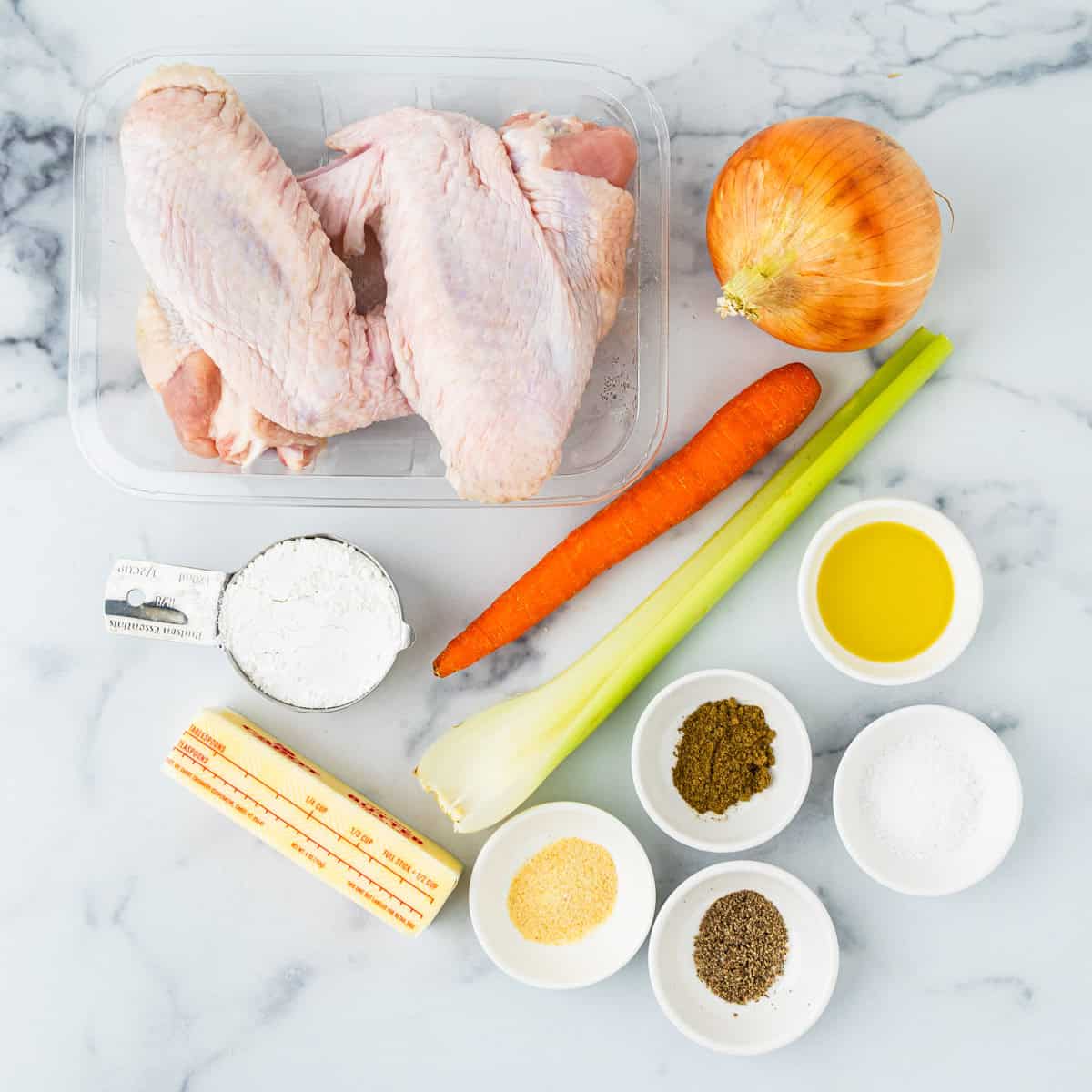
- Turkey wings: You'll usually find them packaged near the whole turkeys and turkey parts. Two pounds is about two whole wings. Leave the skin on, since it adds flavor and helps everything brown.
- Onion, carrot, and celery: Roughly chopped is fine because they get strained out. I leave the skin on the onion, which adds even more color to the stock.
- Chicken stock: I use Swanson Unsalted chicken stock so I can control the salt. The stock reduces as it simmers, and salted stock can end up too salty by the time the gravy is done.
- Poultry seasoning: A little goes a long way and gives the gravy that classic Thanksgiving sage and thyme flavor. I use Spice Islands.
- Butter and flour: Unsalted butter and all-purpose flour make the roux that thickens the gravy.
- Kosher salt: I use Morton Kosher Salt. Some goes on the wings before roasting, and the rest gets added at the end to taste.
See the recipe card at the bottom of this post for the complete list of ingredients and measurements.
Substitutions & Variations
- Turkey necks or backbones: Swap them in for the wings, or use a mix. If you're spatchcocking a turkey, like my smoked spatchcock turkey, roast the backbone you cut out. This is how I make it every Thanksgiving.
- Cornstarch instead of a roux: Skip the butter and flour. Bring the strained stock to a simmer, whisk about ⅓ cup cornstarch into ½ cup cold water, then whisk the slurry into the stock and simmer for 1 to 2 minutes until thickened. I make my Thanksgiving gravy this way too.
- Gluten-free: The cornstarch version is gluten-free as long as your stock is. Check the label to be sure.
- Low-sodium stock: Low-sodium stock works if you can't find unsalted. Taste before adding salt at the end, since you may need less.
How to Make Make-Ahead Turkey Gravy
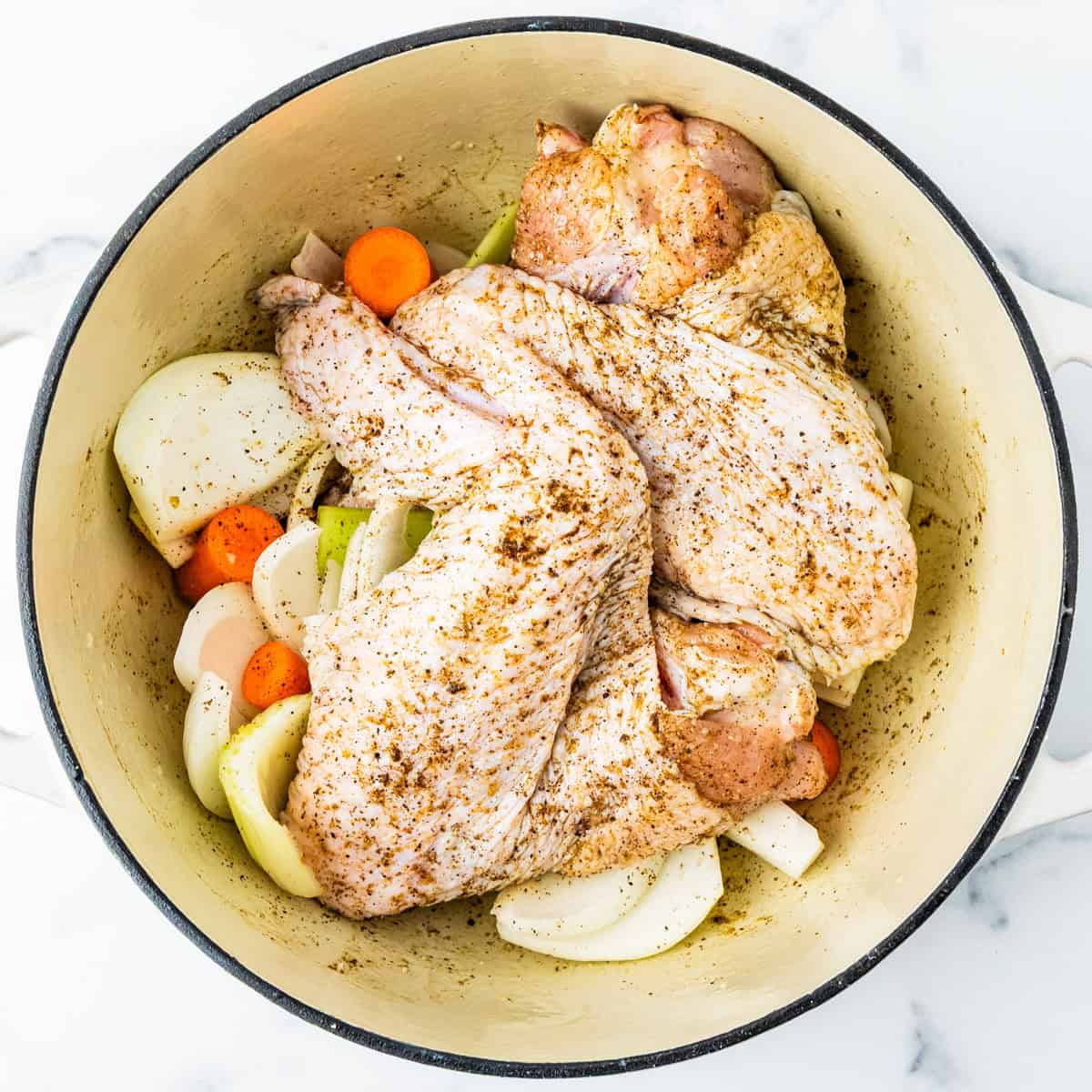
- Roast the wings and vegetables. Toss everything with the oil and seasonings right in the Dutch oven and spread it out in a single layer. Turn the wings halfway through. They're ready when the skin is a deep mahogany brown and the onion edges are dark. Pale wings make pale, flat-tasting gravy, so give them the full time.
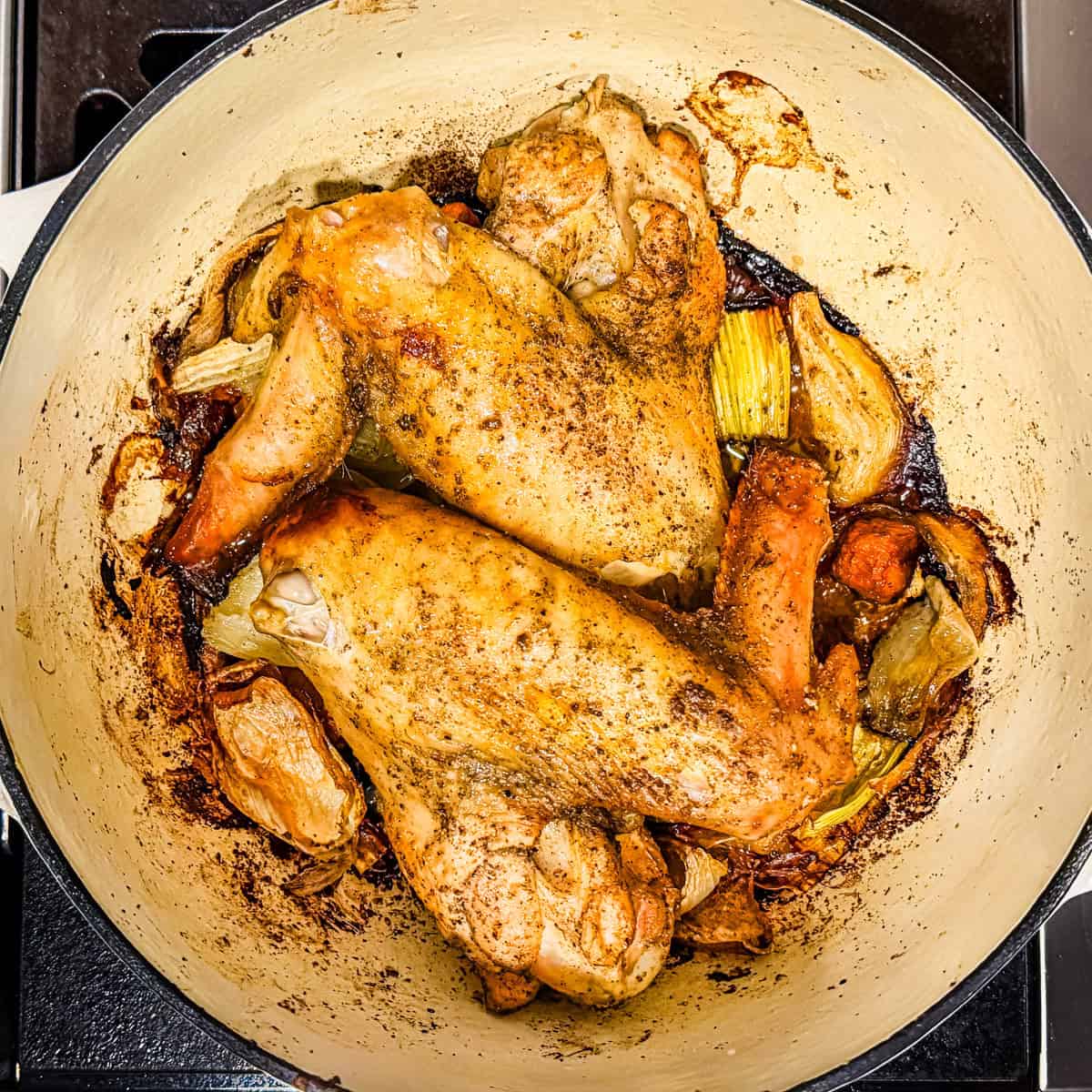
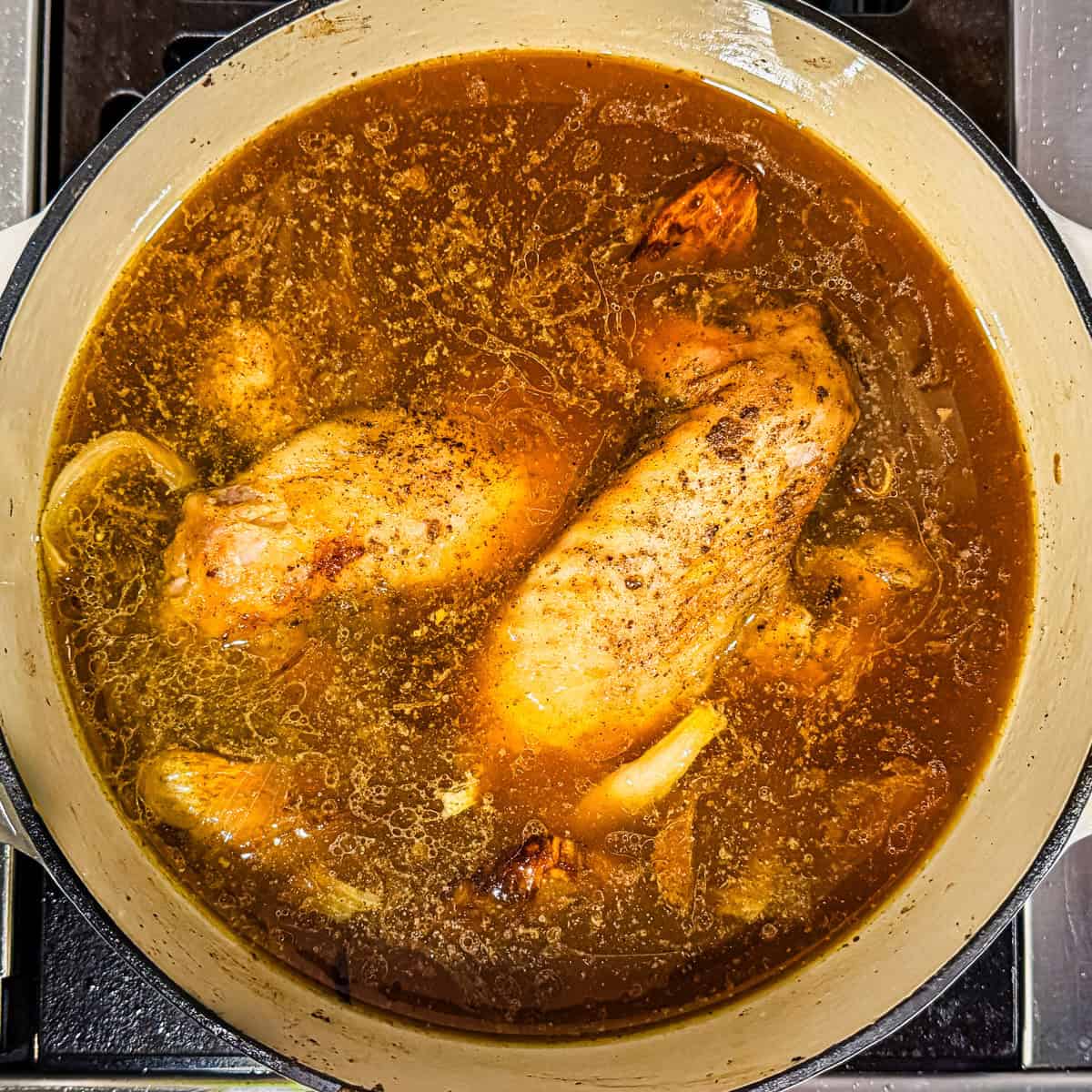
- Simmer the stock. Pour in the stock and scrape the bottom of the pot with a wooden spoon. Those browned bits are where a lot of the flavor lives. Keep it at a gentle simmer once it boils, with small bubbles breaking the surface. A hard boil can make the stock cloudy.
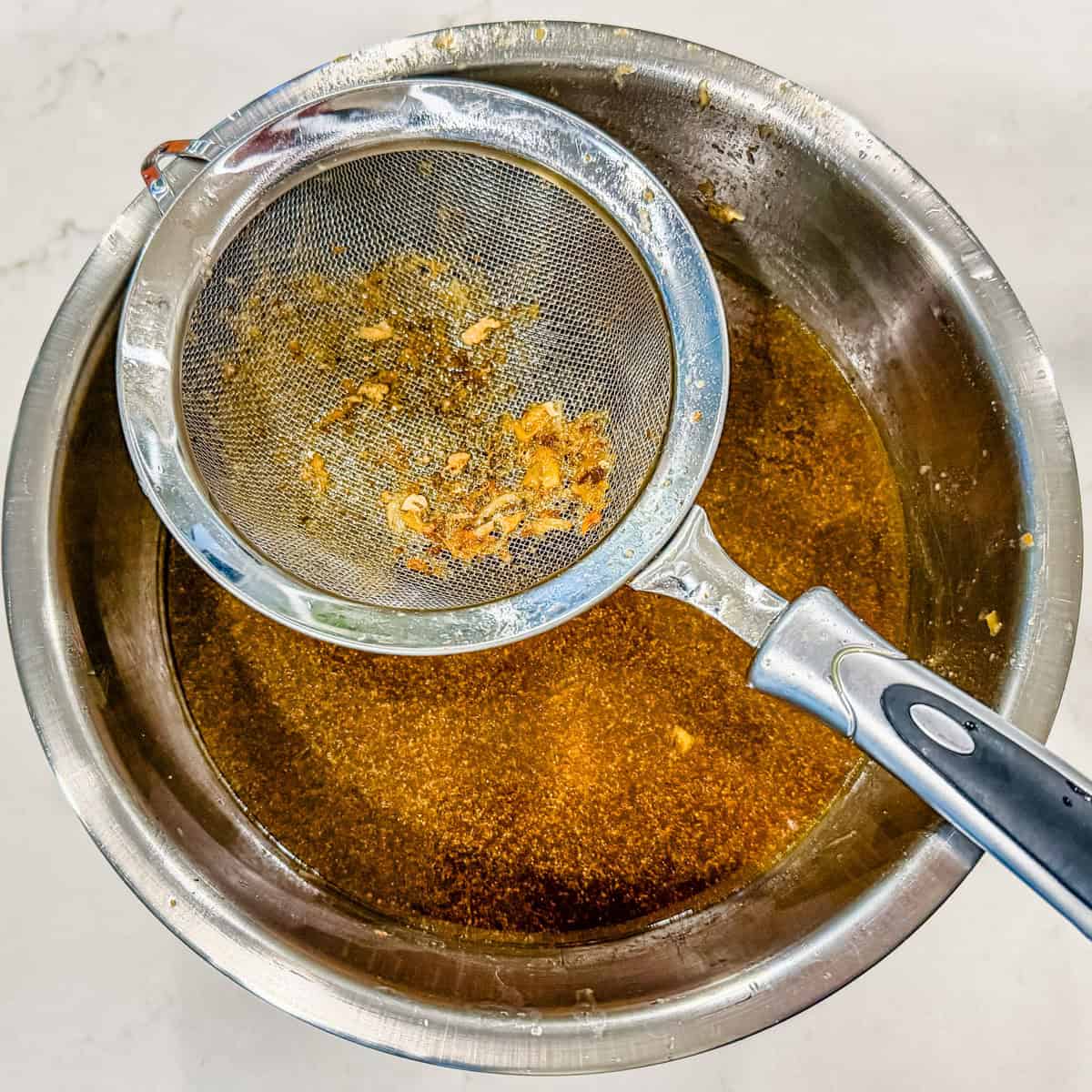
- Strain. Pour the stock through a fine-mesh strainer and discard the wings and vegetables. Wings don't give off much fat, so you may not need to skim. If a thick layer of fat floats to the top, spoon it off.
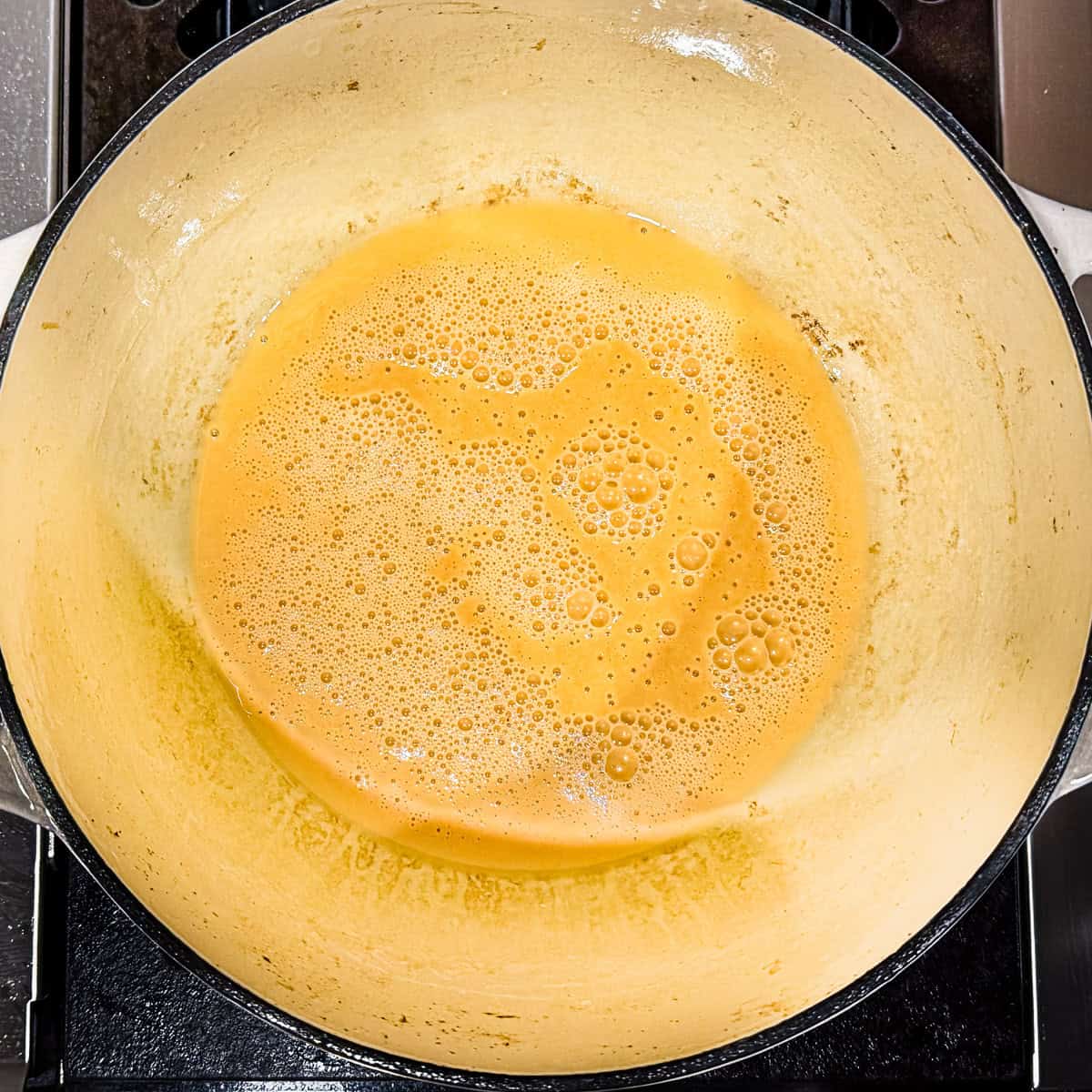
- Make the roux. Melt the butter, whisk in the flour, and keep whisking. In about 3 minutes, it turns golden brown and smells toasty, like baked pie crust. If it starts to look darker than peanut butter, pull it off the heat.
- Whisk in the stock. Add the warm stock about a cup at a time, and whisk until it's smooth before adding more. Adding it slowly is what keeps lumps from forming. The gravy is done when it coats the back of a spoon, and a line drawn through it with your finger holds.
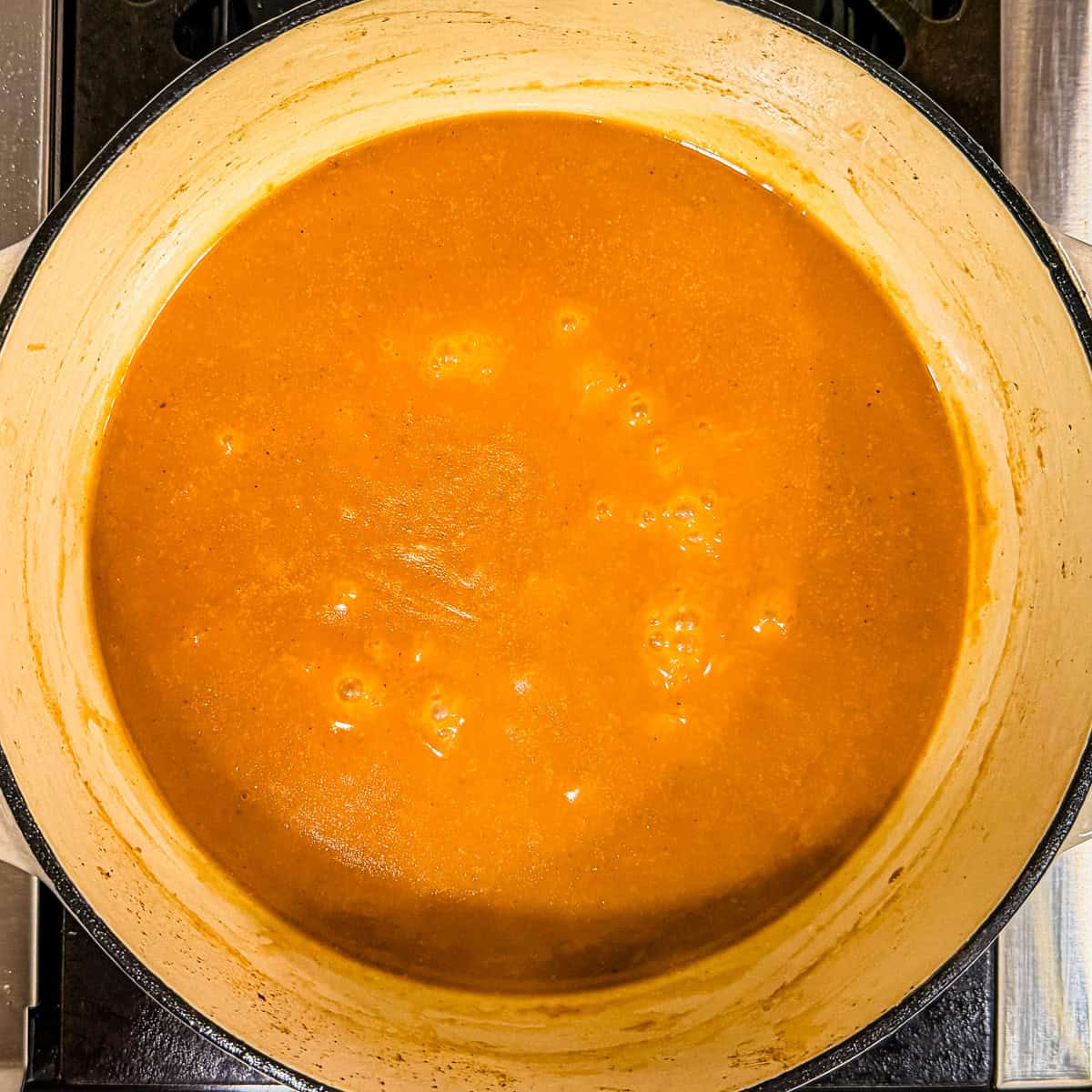
- Season and cool. Taste and add salt and pepper. Then let the gravy cool completely before you cover it.
Expert Tips
- Testing note: I tested this batch with 2 pounds of turkey wings, roasted them for about 2 hours, and kept the gravy in the fridge for 2 days before reheating it. It came out of the fridge as a gel-like solid, and whisking it with a little broth brought it right back to smooth and pourable.
- Salt at the end. The stock cooks down as it simmers, so wait until the gravy is finished before adding salt. My batch needed about 1 teaspoon.
- Don't judge the thickness cold. The gelatin from the wings makes the gravy firm up in the fridge. Resist adding more flour or cornstarch until it's reheated and loosened.
- Cool it uncovered. Covering hot gravy traps steam, and the condensation drips back in and waters it down. Wait until it's cool, then put the lid on.
- One pot does it all. Roasting in the Dutch oven means the browned bits stay in the pot when you add the stock, instead of getting left behind on a sheet pan.
Make-Ahead Tips
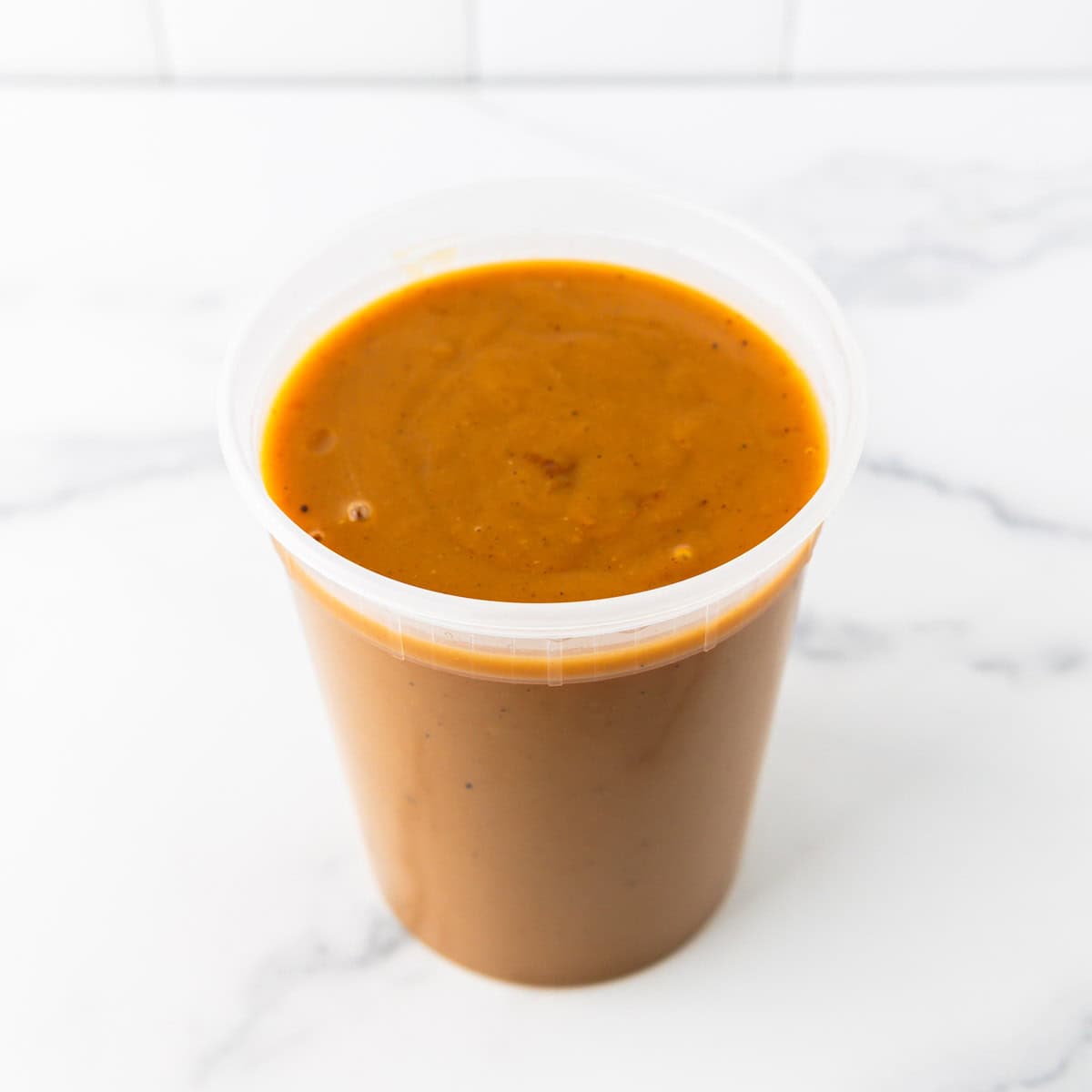
- A few days ahead: Make the gravy start to finish, cool it, and refrigerate it. This is the easiest plan for Thanksgiving week.
- Weeks ahead: Make it and freeze it. Move it to the fridge to thaw 1 to 2 days before you need it.
- On the day: Reheat the gravy while the turkey rests. That's about all the time it needs, and it frees up a burner for everything else.
Storage and Reheating
Store cooled gravy in an airtight container in the fridge for up to 3 days.
To reheat, warm the gravy in a saucepan over medium heat. Whisk in about ¼ cup of chicken stock or broth for every cup of gravy, and keep whisking until it's smooth and steaming hot. Leftover gravy shouldn't sit out at room temperature for more than 2 hours.
Freezing
Freeze the cooled gravy in freezer containers or zip-top bags for up to 3 months. Leave a little room at the top for it to expand. Thaw it overnight in the fridge, then reheat it the same way. If you're planning to freeze, use the roux version. Cornstarch-thickened gravy can turn thin and watery after it thaws.
What to Serve with Make-Ahead Turkey Gravy
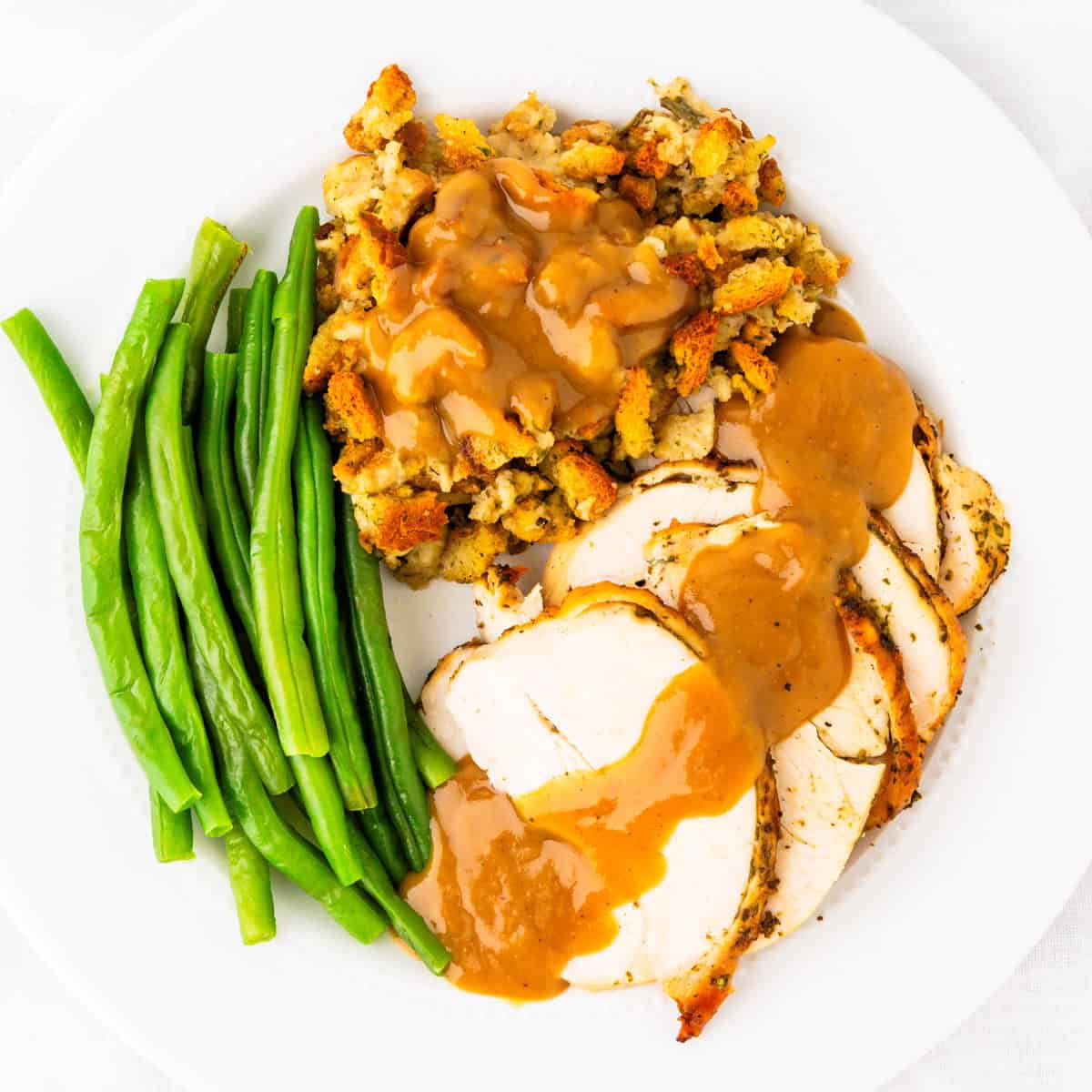
This gravy belongs on the Thanksgiving table with roast turkey, but it's just as good over a weeknight turkey breast or a plate of biscuits. Pour it over anything that soaks it up. Here are a few of my favorite sides to go with it:
- Instant Pot garlic mashed potatoes
- Southern cornbread dressing
- Traditional bread stuffing
- Green bean casserole without soup
Frequently Asked Questions
Plan on about ½ cup per person, plus a little extra if you want leftovers for hot turkey sandwiches. This recipe serves about 12, so make two batches for a bigger crowd.
Let it simmer a few more minutes to cook down. If it's still too thin, whisk 1 tablespoon of cornstarch into 2 tablespoons of cold water, stir it in, and simmer for a minute. Keep in mind the gravy thickens as it cools on the plate.
Whisk it hard over the heat, and most small lumps will break up. If any are left, pour the gravy through a fine-mesh strainer and nobody will know.
Yes! Skim the fat off the drippings or use a fat separator and whisk them into the gravy while it reheats, then simmer for 2 to 3 minutes. You may need less broth to loosen it.
More Recipes



📖 Recipe
Make-Ahead Turkey Gravy
Ingredients
For the stock
- 2 lb turkey wings
- 1 large yellow onion, quartered (skin on)
- 1 carrot, cut into 2-inch pieces
- 1 celery rib, cut into 2-inch pieces
- 1 tablespoon olive oil
- 1 teaspoon Morton kosher salt
- 1 teaspoon poultry seasoning
- ½ teaspoon garlic powder
- ½ teaspoon black pepper
- 8 cups Low-Sodium or Unsalted chicken stock, 2 32-oz cartons
For the gravy
- 6 tablespoons unsalted butter
- ⅓ cup all-purpose flour
- About 1 teaspoon Morton kosher salt, to taste
- Black pepper, to taste
For reheating
- 1½ cups chicken stock or broth
Instructions
- Preheat the oven to 400°F. In a large Dutch oven, toss the turkey wings, onion, carrot, and celery with the olive oil, 1 teaspoon salt, poultry seasoning, garlic powder, and pepper. Spread everything in an even layer.
- Roast uncovered for about 2 hours, turning the wings halfway through, until they're deep golden brown.
- Move the pot to the stovetop over medium-high heat. Pour in the 8 cups of stock and scrape up the browned bits from the bottom. Bring to a boil, then reduce the heat and simmer gently, uncovered, for 1 hour.
- Strain the stock into a large heatproof bowl and discard the solids. If a thick layer of fat rises to the top, skim it off.
- Wipe out the pot. Melt the butter over medium heat, then whisk in the flour. Cook, whisking constantly, for about 3 minutes, until golden brown and toasty.
- Slowly whisk in the warm stock about 1 cup at a time, whisking until smooth before adding more. Simmer for 5 to 8 minutes, until the gravy coats the back of a spoon.
- Season with about 1 teaspoon salt and pepper to taste.
- To make ahead, let the gravy cool completely, then refrigerate it in an airtight container for up to 3 days or freeze for up to 3 months.
- To serve, reheat the gravy in a saucepan over medium heat, whisking in about ¼ cup stock or broth per cup of gravy until smooth and hot.
Notes
- Turkey necks or backbones work in place of the wings, or use a mix.
- Cornstarch option: Skip the butter and flour. Bring the strained stock to a simmer, whisk in about ⅓ cup cornstarch mixed with ½ cup cold water, and simmer 1 to 2 minutes until thickened. Use the roux version if you plan to freeze it.
- Salt at the end. The stock reduces as it simmers, so season once the gravy is finished.
- Thick when cold. The gravy firms up in the fridge. Loosen it with broth as it reheats.
- Storage: Up to 3 days in the fridge or 3 months in the freezer. Thaw frozen gravy overnight in the fridge.
Nutrition
* All nutrition information we provide are estimates based on third party calculators. We encourage you to calculate these on your own for accurate results.


Leave a Reply