
This smoked spatchcock turkey is a whole turkey with the backbone removed so it lies flat on the smoker, rubbed with butter and a homemade blend of sage, thyme, garlic, and paprika. Flattening the bird helps it cook faster and more evenly, so the white meat stays moist and juicy while the dark meat finishes cooking. It's a great way to make Thanksgiving turkey without tying up your oven all day!
The rub combines classic herb-roasted turkey flavors with traditional barbecue seasonings for a savory, smoky flavor. A 10 to 12 pound turkey takes about three hours to smoke at 275°F, so you don't have to spend all day tending the smoker!

Jump to:
- Quick Look
- Why this Recipe Works
- Ingredient Notes
- How to Spatchcock a Turkey
- What Temperature Is Best for Smoked Spatchcock Turkey?
- How Long Does It Take to Smoke a Spatchcock Turkey at 275°F?
- How to Make Smoked Spatchcock Turkey
- Scott's Tips
- How to Carve a Spatchcock Turkey
- What to Serve with Smoked Spatchcock Turkey
- Storage and Reheating
- Make-Ahead Tips
- Frequently Asked Questions
- More Turkey Recipes
- 📖 Recipe
- You May Also Like
Quick Look
- Total time: About 3½ hours, including prep and resting
- Key ingredients: A 10 to 12 pound whole turkey, melted butter, and a homemade herb and barbecue spice rub
- Flavor: Savory and smoky, with classic sage and thyme turkey flavor
- Method: Spatchcocked, then smoked flat at 275°F on a pellet grill or smoker
- Serve it with: Classic Thanksgiving sides or your favorite barbecue sides
- Make-ahead: Mix the rub ahead, or smoke the turkey a day early and reheat the sliced meat
If you give this smoked spatchcock turkey a try, please leave a star rating and a comment below. I love hearing how it turns out for you!
Why this Recipe Works
- Faster, more even cooking: Removing the backbone and laying the turkey flat exposes more of the bird to the heat. The thighs and breasts cook more evenly, so the breast meat is less likely to dry out while you wait for the dark meat to finish.
- Smoked at 275°F: A slightly hotter smoker shortens the cook and gives the skin a better texture (more on that below).
- Classic herbs with a barbecue twist: Sage and thyme bring the familiar flavors of Thanksgiving turkey, while garlic, onion, and paprika add a little barbecue flavor.
- The right size turkey: I prefer a 10 to 12 pound turkey for smoking. It's easier to handle, fits most smokers when flattened, and cooks faster than a larger bird.
- Keeps the oven free: Since the turkey cooks entirely on the smoker, you've got plenty of oven space for the dressing, casseroles, and rolls.
And be sure to check out my Simple Roasted Turkey post for more tips on buying and thawing your turkey!
Ingredient Notes

- Turkey: A 10 to 12 pound whole turkey is my preferred size for smoking. Plan on about 1 pound of raw, bone-in turkey per person, or roughly 10 servings for this recipe. If you're feeding a bigger crowd, I'd rather smoke two smaller turkeys than one really large bird, as long as there's enough room on the smoker.
- Butter: Use unsalted butter. It helps the seasoning stick, adds rich flavor, and encourages the skin to brown while it smokes.
- Kosher salt: I use Morton kosher salt. Check the turkey's packaging before seasoning it. Some turkeys are labeled "enhanced," "self-basting," or "contains a solution," meaning they've already been treated with salt. Reduce or omit the additional salt for these birds. If using Diamond Crystal kosher salt, use around two tablespoons.
- Dried sage and thyme: These give the turkey that familiar herb-roasted Thanksgiving flavor.
- Paprika, garlic powder, and onion powder: Along with the black pepper, these add savory barbecue flavor and help give the skin its color.
- Wood: On a charcoal smoker, I like a combination of hickory and applewood chunks. Hickory gives the classic barbecue flavor, and apple adds a little sweetness without overpowering the turkey. On a pellet grill, Pit Boss Competition Blend or applewood pellets both work well. Cherry and pecan are good options too.
See the recipe card at the bottom of this post for the complete list of ingredients and measurements.
How to Spatchcock a Turkey
Spatchcocking, also called butterflying, means cutting out the backbone so the turkey lies flat. It might sound intimidating, but all you need is a sturdy pair of kitchen shears. I use OXO kitchen shears.

- Clean out the turkey: Set the turkey on a large, sturdy cutting board, breast side down. Remove the neck and giblets from the cavity, along with the pop-up timer if your turkey has one and any other plastic pieces.
- Cut out the backbone: Starting at the tail end, cut along one side of the backbone all the way up to the neck. Then cut along the other side and remove the backbone. Don't throw it away! I always save it to make gravy or stock.
- Flip and flatten: Turn the turkey over so it's breast side up and open it so it lies as flat as possible. Some recipes tell you to press down hard enough to crack the breastbone. That's pretty difficult on a turkey this size, and I haven't found that it makes much difference, so I skip it.
- Tuck the wings: Fold the wing tips back and tuck them under the top of the breast. This keeps them from burning and helps the turkey sit flat on the smoker.
- Pat it dry: Use paper towels to dry the skin so the butter and seasonings stick. A dry surface also helps the skin brown as it cooks.
Tip: Make sure your turkey will fit on your smoker after it's flattened. A spatchcocked turkey takes up a little more grate space than an uncut bird, so check your cooking area before getting started.
I use the same technique for my smoked whole chicken, so once you've spatchcocked a turkey, you can handle a chicken too!
What Temperature Is Best for Smoked Spatchcock Turkey?
I smoke my spatchcock turkey at 275°F, which is a little hotter than the 225°F used for traditional low-and-slow barbecue like pulled pork or brisket.
Those cuts need a long cook to break down the fat and connective tissue. Turkey is much leaner, so it doesn't benefit from spending all day on the smoker.
The other advantage of smoking at 275°F is the skin. At lower temperatures, turkey skin can turn out tough and rubbery. Cooking at 275°F helps the fat render and the skin develop a nice smoky brown color, although it won't get quite as crisp as oven-roasted turkey.
How Long Does It Take to Smoke a Spatchcock Turkey at 275°F?
A 10 to 12 pound spatchcock turkey typically takes about 2½ to 3 hours to smoke at 275°F, plus another 20 to 30 minutes to rest.
That's roughly 12 to 15 minutes per pound, but every turkey and smoker is a little different. Wind, outdoor temperature, and how well your smoker maintains its heat can all affect the cooking time.
I recommend building an extra 30 to 60 minutes into your schedule, especially when you're cooking for Thanksgiving. Always cook to temperature, not time.
How to Make Smoked Spatchcock Turkey
- Fire up the smoker: Get your smoker or pellet grill holding steady at 275°F before the turkey goes on. On a charcoal smoker, add the wood chunks and wait for the smoke to turn thin and light blue. Thick, white smoke can give the turkey a bitter taste.
- Mix the rub: Stir the salt, pepper, paprika, sage, onion powder, garlic powder, and thyme together in a small bowl. If your turkey has already been treated with a salt solution, reduce or omit the added salt.
- Spatchcock the turkey: Remove the backbone, flatten the turkey, and tuck the wings as shown in the section above. Pat the skin dry with paper towels.

- Butter and season: Brush the skin all over with the melted butter, then sprinkle the rub evenly over the turkey. Make sure to season the thighs and legs along with the breast.


- Smoke the turkey: Set the turkey directly on the grates, breast side up, and insert a leave-in probe into the thickest part of the breast without touching the bone. My pellet smoker has a built-in drip tray, so there's no need for a separate pan underneath. Plan on approximately 2½ to 3 hours for a 10 to 12 pound turkey, but go by temperature, not the clock.


- Check, rest, and verify: I typically pull the turkey when the thickest part of the breast reaches around 160°F and the thighs are around 170 to 175°F for tender dark meat. Tent it loosely with foil and let it rest for 20 to 30 minutes. Carryover cooking can bring the breast to 165°F as it rests, but don't assume it will. Check both breasts, thighs, and wings with an instant-read thermometer to verify every part has reached the safe minimum of 165°F before carving. If any part stops rising below 165°F, return the turkey to the smoker or a 325°F oven to finish cooking.
- Carve and serve: Carve the turkey using the steps in the section below, then arrange it on a platter and serve.
Scott's Tips
- Keep the lid closed: Try not to open the smoker too often. Every peek lets heat and smoke escape and adds time to the cook.
- Use a leave-in thermometer: A leave-in thermometer lets you monitor the turkey without constantly opening the lid. I use a ThermoWorks Signals with one probe in the breast and another at the grate to keep track of the cooking temperature.
- Check both sides: One side of the turkey often cooks a little faster than the other, so always check both sides with an instant-read thermometer. My go-to is the ThermoWorks Thermapen.
- Don't skip the rest: Resting gives the juices time to redistribute throughout the meat and helps keep the turkey moist when you carve it.
- Build in a buffer: I always plan extra time when smoking turkey for a holiday meal. If it finishes early, let it rest before carving. If you need to hold it longer, keep it at 140°F or above rather than leaving it at room temperature for an extended period.
New to smoking? My Beginner's Guide to Smoking Meat covers smoker setup, temperature control, and other basics.
How to Carve a Spatchcock Turkey
Carving a spatchcocked turkey is basically the same as carving a whole turkey, but it's a little easier because the bird is already laid out flat and the backbone is gone.
- Remove the legs: Cut through the skin between the breast and thigh, then pull the leg and thigh away from the body and cut through the hip joint.
- Separate the drumstick and thigh: Cut through the joint that connects them, then carve the meat from the thigh.
- Remove the breasts: Make a horizontal cut along the bottom of the breast, just above the wing. Then cut down along the breastbone, following the curve of the bones and gently pulling the meat away as you go until each breast comes free.
- Slice the breast: Place the breast skin side up on the cutting board and slice it across the grain into ¼ to ½-inch slices.
- Remove the wings: Cut through the joint where each wing meets the body, then separate the drumette and flat if you like.
- Arrange the sliced breast meat on a platter with the thighs, drumsticks, and wings, and serve.


What to Serve with Smoked Spatchcock Turkey
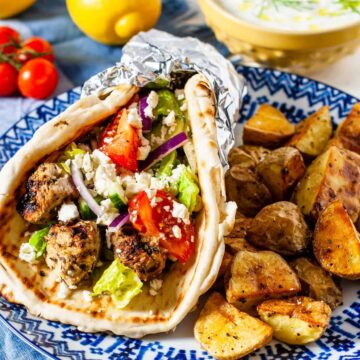
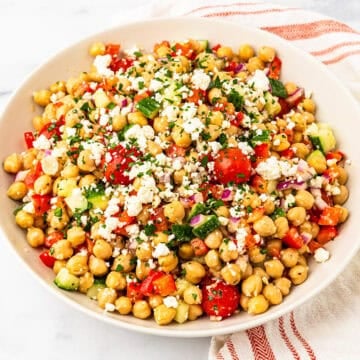
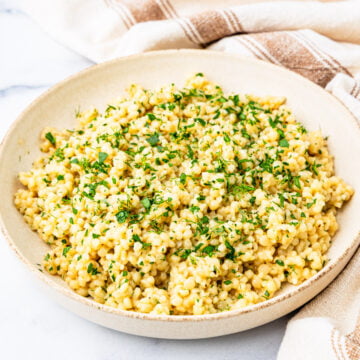
For Thanksgiving, I like to serve this turkey with traditional holiday sides. A few of my favorites are:
If you're making this turkey for a weekend barbecue or cookout, these sides go well with the smoky flavor:

Storage and Reheating
Storage: Keep leftover turkey in an airtight container in the refrigerator for 3 to 4 days. For faster cooling, remove the meat from the bones and divide it into smaller portions before refrigerating.
Reheating: The skin won't stay crisp once it's reheated, so I like to remove it first. Place the sliced turkey in a baking dish with a splash of chicken or turkey broth, cover tightly with foil, and warm it in a 325°F oven until the center reaches 165°F. For smaller portions, the microwave works fine. Cover the turkey and heat it in short intervals, checking the temperature so it doesn't overcook.
Leftovers: Leftover smoked turkey makes great sandwiches! I also use it in my Instant Pot Turkey Pot Pie and Turkey Noodle Casserole.
Make-Ahead Tips
If you're making this turkey for Thanksgiving, there are a few things you can prepare ahead of time to make the day easier.
- Mix the rub early: The rub is all dry spices, so you can stir it together several days ahead and keep it in a sealed jar until you're ready to cook.
- Spatchcock the turkey ahead: You can remove the backbone and flatten the turkey the day before cooking. Keep it covered in the refrigerator at 40°F or below. On the day, just pat the skin dry, butter, and season it before it goes on the smoker.
- Smoke it the day before: You can also smoke the turkey a day early. After resting, remove the meat from the bones, divide it into smaller portions, and refrigerate it in shallow, covered containers within two hours of cooking.
- Reheat on the day: Slice the cold turkey, which is easier to cut neatly anyway, then reheat it as directed below.
For the best skin and presentation, I prefer smoking the turkey on the day I'm serving it. But if you've got a lot going on in the kitchen, making it ahead works too.
Frequently Asked Questions
I don't usually brine mine because many store-bought turkeys are already treated with a salt solution. Brining one of those again can make the meat too salty.
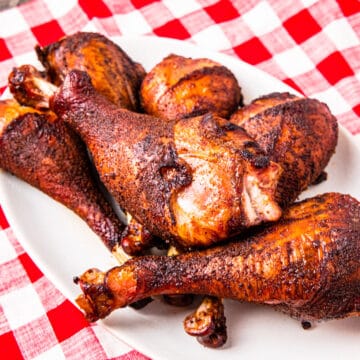
Check the packaging for words like "enhanced," "self-basting," or "contains a solution." If you buy a turkey that hasn't been treated with salt, you can brine it overnight before smoking. My Smoked Turkey Legs recipe includes a simple brine you can use.
Yes, but if you're using a turkey that has already been treated with a salt solution, be careful not to add too much additional salt.
My Cajun Turkey Injection is a good option for adding more flavor. I recommend using it with a turkey that hasn't been pre-brined, or adjusting the salt in the injection accordingly.
No. Rinsing raw turkey can spread bacteria around your kitchen, so I recommend skipping that step.
If you've brined the turkey yourself, remove it from the brine and pat the skin dry with paper towels. You don't need to rinse it. Keep the turkey refrigerated while brining and clean and sanitize any surfaces that come into contact with the raw meat or brine.
Yes! This recipe works on a pellet grill like a Traeger, Pit Boss, or recteq. A pellet grill makes it easy to hold a steady 275°F without constantly adjusting the heat, and the built-in drip tray means you don't need a separate pan.
The safest way is in the refrigerator, and it takes about 24 hours for every 4 to 5 pounds. That means a 10 to 12 pound turkey generally needs about 2 to 3 days, so plan ahead!
If you're short on time, you can thaw the turkey in its original leakproof packaging or a leakproof bag in cold water. Change the water every 30 minutes and allow about 30 minutes per pound. Cook the turkey immediately after thawing with this method.
My Simple Roasted Turkey post has more tips on buying and thawing your turkey.
More Turkey Recipes
Looking for another way to cook turkey? Here are a few more recipes from the site:


📖 Recipe

Smoked Spatchcock Turkey
Ingredients
- 10 to 12 pound whole turkey, thawed
- 1 stick butter, melted
Smoked Turkey Rub
- 1 Tablespoon Morton Kosher salt, reduce to 2 teaspoon or omit for a pre-brined or self-basting turkey
- 1 teaspoon freshly ground black pepper
- 1 teaspoon paprika
- 1 teaspoon dried sage
- 1 teaspoon onion powder
- 1 teaspoon garlic powder
- ½ teaspoon dried thyme
Instructions
- Preheat the smoker: Preheat your smoker to 275°F. Use hickory and applewood chunks on a charcoal smoker, or competition blend or applewood pellets on a pellet grill.
- Mix the rub: Stir the salt, pepper, paprika, sage, onion powder, garlic powder, and thyme together in a small bowl. Reduce or omit the salt if your turkey has already been treated with a salt solution.
- Prepare the turkey: Set the turkey on a cutting board, breast side down. Remove the neck and giblets, the pop-up timer if present, and any other plastic pieces.
- Spatchcock the turkey: Using kitchen shears, cut along both sides of the backbone and remove it. Save the backbone for gravy or stock.
- Flatten and dry: Turn the turkey breast side up and open it so it lies flat. Fold the wing tips back and tuck them under the top of the breast. Pat the skin dry with paper towels.
- Butter and season: Brush the skin all over with the melted butter, then sprinkle the seasoning evenly over the turkey.
- Smoke the turkey: Place the turkey directly on the smoker grates, breast side up, and insert a probe thermometer into the thickest part of the breast without touching the bone. Smoke at 275°F for approximately 2½ to 3 hours, until the breast reaches about 160°F and the thighs reach 170 to 175°F.
- Rest and verify: Remove the turkey, tent loosely with foil, and rest for 20 to 30 minutes. Check both breasts, thighs, and wings with an instant-read thermometer to confirm every part has reached at least 165°F. If any part stops rising below 165°F, return the turkey to the smoker or a 325°F oven until it does.
- Carve and serve: Remove the legs, thighs, wings, and breast meat. Slice the breasts across the grain and arrange everything on a serving platter.
Notes
- Cook time: Plan on approximately 2½ to 3 hours at 275°F for a 10 to 12 pound spatchcock turkey, plus resting time. Allow extra time as needed and always cook to temperature.
- Turkey size: A 10 to 12 pound turkey works well for smoking. To feed a larger crowd, smoke two smaller turkeys instead of one very large bird, provided you have enough room on your smoker.
- Pre-brined turkey: Some supermarket turkeys are already treated with a salt solution. Check the packaging before seasoning, and avoid brining these birds again.
- Salt: The listed amount uses Morton kosher salt for a turkey without added salt solution. If using Diamond Crystal kosher salt, use approximately 2 tablespoons by volume for a similar salt amount.
- Smoking wood: I like hickory and applewood for a balance of classic barbecue flavor and mild sweetness. Cherry and pecan are also good choices.
- Make-ahead: Spatchcock the turkey up to a day before smoking and keep it covered in the refrigerator. You can also cook it the day before serving, then carve and refrigerate it in shallow containers within two hours.
- Storage: Refrigerate leftovers in an airtight container for 3 to 4 days. Reheat covered with a splash of broth at 325°F until the center reaches 165°F.
- Nutrition: Nutrition is an estimate based on a turkey without added salt solution, including all of the butter. Sodium will be higher for pre-brined or enhanced turkeys.
Nutrition
* All nutrition information we provide are estimates based on third party calculators. We encourage you to calculate these on your own for accurate results.
Leave a Reply