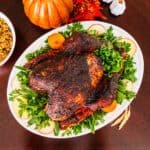
Cajun Roasted Turkey
A whole turkey injected with Cajun butter marinade, rubbed with fresh herb butter, and coated with Creole seasoning, then roasted until juicy and golden brown. A bold, flavorful twist on Thanksgiving turkey.
Servings: 12
Calories: 388kcal
Ingredients
- 1 12-14 pound Turkey thawed
- 2 Tablespoons Creole seasoning or Cajun seasoning, divided
- 14 ounces Cajun butter injection marinade completely cooled
Herb Butter
- ½ cup butter 1 stick
- 1 Tabelspoon chopped fresh parsley
- 1 teaspoon chopped fresh rosemary
- 1 teaspoon chopped fresh sage
- 1 teaspoon chopped fresh thyme
Instructions
- Mix the softened butter and chopped herbs in a small bowl.
- Remove the neck and giblets from the turkey, trim any excess skin and fat around the neck cavity, and pat the turkey dry with paper towels.
- Gently separate the skin from the breast and thigh meat with your fingers. Spread about half of the herb butter under the skin.
- Season the cavity with about 1 tablespoon of the Creole seasoning. Tie the legs together with butcher's twine and fold the wings under the breast. Spread the remaining herb butter over the outside of the turkey and set it on a rack in a roasting pan.
- Inject small amounts of the cooled injection all over the turkey, focusing on the thickest parts of the breasts, thighs, and legs. Let the turkey rest on the counter for up to 1 hour, or cover and refrigerate it for up to 24 hours.
- Preheat the oven to 425°F. Season the outside of the turkey with the remaining Creole seasoning, turning it to season the thighs and legs.
- Roast for 20 minutes, then reduce the heat to 325°F. Continue roasting until both breasts reach 160°F in the thickest part and the thighs reach 170°F, about 2½ to 3 hours total for a 12 to 14 pound turkey.
- Loosely tent the turkey with foil and rest for 30 minutes. The breast will rise to 165°F as it rests. If any part hasn't reached 165°F after resting, return the turkey to the oven until it does.
- Carve and serve.
Notes
- Pre-treated turkeys: Check the label for words like "enhanced" or "self-basting." If your turkey has been treated with salt, use salt-free Creole seasoning in both the injection and the rub.
- More heat: Use Cajun seasoning instead of Creole seasoning, or add a little extra cayenne.
- Browning: If the skin gets too dark, loosely cover the turkey with foil.
- Gravy: Add chopped onion, carrots, celery, and ¼ cup of water or chicken stock to the roasting pan for flavorful drippings.
- Storage: Refrigerate leftovers in an airtight container for 3 to 4 days. Remove the skin, then reheat covered with a splash of broth at 325°F until it reaches 165°F.
- Nutrition: Estimate based on a turkey that hasn't been pre-brined, homemade Creole seasoning, and all of the butter in the injection and herb butter.
Nutrition
Calories: 388kcal | Carbohydrates: 2g | Protein: 48g | Fat: 16g | Saturated Fat: 5g